SoftBank’s $200M Bet on Gravis Robotics and Excavator Automation
SoftBank’s latest $200 million investment in excavator‑automation startup Gravis Robotics signals how seriously automation is coming for heavy construction. Yet even on announcement day, the startup’s key productivity claims were presented in inconsistent ways and without clear methodology. This mix of huge capital, bold promises, and limited transparency makes Gravis a revealing case study for how robotics might scale in one of the world’s most traditional industries.
Why a $200M Bet on Excavator Automation Matters
SoftBank’s decision to inject $200 million into Gravis Robotics, a startup focused on automating excavators, is a clear signal: heavy construction is entering a new phase of robotics and autonomy. Excavators are the workhorses of earthmoving and infrastructure projects; automating their operation could reshape costs, schedules, and safety across the industry.
Yet the announcement came with a twist. Gravis’s headline productivity figure was reportedly stated in two different ways on the same day, with no published method explaining either version. That detail highlights a broader challenge in robotics and AI: big promises are easy, but rigorous, transparent metrics are harder—and more important—than ever.
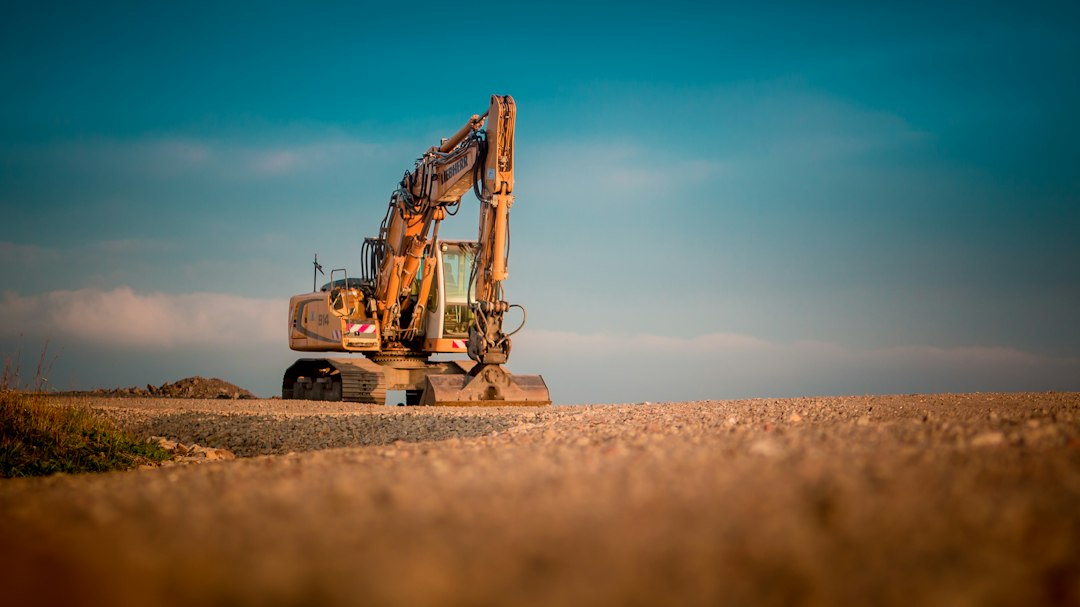
The Vision Behind Excavator Automation
Automating excavators is not just about swapping a human with a robot. It represents a systematic attempt to digitize and optimize one of the most physical, analog parts of the global economy: moving dirt, digging foundations, and shaping terrain for roads, rail, utilities, and buildings.
Core Idea: From Manual Operation to Smart Systems
Instead of an operator sitting in a cab moving joysticks, an automated excavator relies on sensors, software, and connectivity. In broad terms, systems like the one Gravis Robotics is pursuing often aim to:
- Perceive the environment using cameras, LiDAR, radar, or other sensors.
- Localize the machine’s position on a site using GPS, RTK, or visual mapping.
- Plan safe and efficient dig-and-dump cycles based on 3D models and site plans.
- Execute movements through control systems that operate the boom, arm, and bucket.
- Report performance and status back to a cloud or site management system.
The aim is to reduce dependence on scarce skilled labor, increase machine utilization, and transform earthmoving into a repeatable, data-driven industrial process.
SoftBank’s Strategic Angle
SoftBank has a long history of making big, high-conviction bets on technology that could reshape entire industries. A $200 million commitment to Gravis Robotics fits a pattern: place capital behind a company early in a market where scale, data, and first-mover advantage could matter more than incremental product features.
Why Construction, Why Now?
- Global infrastructure demand: Governments are ramping up public works and climate-resilient infrastructure, but delivery capacity lags.
- Labor shortages: Many regions face a shortfall of experienced equipment operators, pushing wages and project delays up.
- Digitization gap: Compared with manufacturing or logistics, construction remains under-automated and under-instrumented.
- Data flywheel potential: Each automated excavator can collect real-world data that improves software and models over time.
For SoftBank, owning a stake in a potential category leader in excavator automation could be a leveraged bet on the digital transformation of the entire construction value chain.
The Productivity Question: Why the Numbers Matter
According to reports, Gravis Robotics’ announcement highlighted a single, attention-grabbing productivity figure—but stated in two different ways on the same day, without publishing the methodology behind either. Even without the exact numbers, this inconsistency is important.
What “Productivity” Can Mean in Earthmoving
In excavation, productivity metrics can be defined in many ways, for example:
- Cubic meters (or yards) of earth moved per hour of machine time.
- Cubic meters moved per paid labor hour (including support staff).
- Cost per cubic meter moved (fuel + labor + equipment + overhead).
- Schedule adherence, such as days ahead or behind planned excavation.
A headline claim like “X% more productive” can mean very different things depending on the baseline, conditions, and formula. Two different phrasings of the same core claim, without a shared underlying method, make it hard for contractors, investors, and regulators to judge real-world impact.
Red Flags vs Growing Pains in Robotics Metrics
In fast-moving robotics fields, inconsistent or opaque metrics aren’t unique to Gravis Robotics. They are a recurring tension between marketing, engineering, and investor expectations.
Potential Explanations for Conflicting Productivity Claims
- Different baselines: One figure might compare against expert operators, another against less experienced crews.
- Different environments: Lab-style test beds versus messy, real-world construction sites.
- Partial vs full autonomy: A metric might mix autonomous and remote-operated time, but be framed as “automation.”
- Rushed communications: Messaging prepared for different audiences (investors vs industry) may not have been fully aligned.
None of these are inherently malicious, but they underscore the need for clear definitions, shared test protocols, and public benchmarks if automation is to earn the trust of conservative, risk-averse construction firms.
Quick Checklist for Evaluating Robotics Productivity Claims
Ask these questions whenever you see a bold percentage improvement:
1) What exactly is being measured (volume, time, cost)?
2) Against which baseline and skill level?
3) Under what conditions (weather, soil, site complexity)?
4) Over how long and how many projects?
5) Who verified the results?
How Excavator Automation Could Reshape Construction
Despite the uncertainty around specific metrics, the strategic potential of excavator automation is significant. Even smaller, well-verified gains can compound across large projects and fleets.
Operational Benefits
- Extended utilization: Autonomous machines can work longer shifts, potentially including nights, when noise and lighting rules permit.
- Reduced rework: Tighter adherence to 3D models may reduce over-digging or under-digging, avoiding corrective passes.
- More predictable schedules: Software-driven operations can reduce some human variability in daily output.
- Better planning: Continuous telemetry allows managers to forecast progress and adjust resources proactively.
Safety and Compliance
Construction remains one of the most dangerous industries. Keeping operators out of cabs in hazardous zones—steep slopes, unstable ground, or contaminated sites—could materially reduce risk. Automation also offers:
- Automatic geofencing to avoid utilities and no-go zones.
- Automated logging for incident reconstruction and compliance audits.
- Potential integration with site-wide safety systems and wearables.
Commercial and Competitive Landscape
Gravis Robotics is not operating in a vacuum. Major equipment manufacturers and other startups are also exploring partial and full automation for excavators, loaders, and other heavy machinery. SoftBank’s $200 million commitment could intensify competition and accelerate timelines.
Key Competitive Dimensions
- Retrofit vs new-build: Systems that can retrofit existing excavators may scale faster than those relying on new hardware.
- Open vs closed ecosystems: Some solutions are tightly coupled with a single OEM brand; others aim to support mixed fleets.
- Level of autonomy: Remote operation, assistive automation (like dig-depth control), and full autonomy each have different risk and adoption profiles.
- Deployment support: Training, site assessment, and integration with BIM and project management tools can make or break rollout success.
| Approach | Typical Benefits | Main Challenges | Best Fit Use Cases |
|---|---|---|---|
| Assistive Automation (Operator in Cab) | Easier adoption, faster learning curve, incremental productivity gains | Still dependent on operator skill and availability | General building sites, smaller contractors |
| Remote Operation | Improved safety, centralization of skilled operators | Network reliability, latency, control center costs | Hazardous or remote sites, mines, disaster zones |
| Full Autonomy | Maximum potential utilization and data collection | Complex validation, regulatory and insurance hurdles | Large, repeatable earthmoving projects with controlled conditions |
Risks and Open Questions
SoftBank’s investment validates the space but does not eliminate the underlying risks. For Gravis Robotics and its peers, several questions still need answers.
Technical and Operational Risks
- Edge cases: Construction sites are full of corner cases—mud, snow, unexpected obstacles, changing plans—that challenge autonomy.
- Integration complexity: Excavation is just one task; coordination with survey, trucking, and follow-on trades is essential.
- Maintenance and uptime: More sensors and control systems introduce new points of failure.
Trust, Transparency, and Governance
The conflicting productivity statements around Gravis’s launch underscore a softer, but critical, risk: credibility. To gain lasting adoption, automation vendors will likely need:
- Standardized test protocols co-developed with contractors and industry bodies.
- Third-party validation of performance claims.
- Clear disclosure of where systems perform well—and where they do not.
How Contractors Can Prepare for Excavator Automation
While the market shakes out, forward-looking contractors don’t have to wait on the sidelines. There are concrete steps firms can take now to get automation-ready.
Practical Steps for the Next 12–24 Months
- Digitize your plans and site data: Move aggressively toward 3D models, digital terrain data, and connected survey workflows.
- Instrument your current fleet: Use telematics to establish a baseline of utilization, fuel use, and production per machine.
- Pilot on low-risk projects: When engaging vendors like Gravis or competitors, start with constrained sites and non-critical timelines.
- Build an internal champion team: Identify operators, engineers, and project managers who can lead experimentation and training.
- Negotiate for transparency: Make data access, joint KPI definitions, and clear success metrics part of any pilot agreement.
Final Thoughts
SoftBank’s $200 million investment in Gravis Robotics is a milestone for excavator automation and a signal that the digital transformation of construction is accelerating. Automating heavy machinery could unlock meaningful gains in productivity, safety, and predictability—but those gains must be demonstrated with clear, consistent, and independently verifiable metrics.
Gravis’s inconsistent headline productivity figure is a cautionary note amid the excitement. Investors, contractors, and regulators should welcome ambition while insisting on transparency. If the sector can align bold capital with rigorous measurement, excavator automation will move from eye-catching announcements to everyday jobsite reality.
Editorial note: This article is an independent analysis based solely on publicly described aspects of SoftBank’s investment in Gravis Robotics and general industry context. For more details, see the original coverage at Silicon Canals.