Making “AI Avenue” Work for Pittsburgh’s Small Businesses and Tech Leaders
Pittsburgh is betting on artificial intelligence as a new engine of growth, with “AI Avenue” emerging as a flagship concept for that vision. Local entrepreneurs, neighborhood businesses, universities, and tech companies broadly want it to succeed. The hard part is less about enthusiasm and more about execution: how to build an innovation corridor that creates real value on the street, not just in pitch decks. This article walks through practical ways Pittsburgh can turn AI Avenue into a shared success story for the whole city.
What Is Pittsburgh’s “AI Avenue” Vision?
Across the United States, cities are racing to brand and build “innovation districts” that connect research, startups, and established industry. In Pittsburgh, the emerging concept of an “AI Avenue” is a way to focus that effort around one of the city’s strongest assets: artificial intelligence. Rather than treating AI as something that lives only in research labs or venture-backed startups, AI Avenue is meant to weave those capabilities into the daily life and economy of the city.
On one side are world-class universities, research institutes, and growing AI firms. On the other side are the corner restaurants, independent retailers, service companies, and legacy manufacturers that make Pittsburgh’s economy and neighborhoods run. Both groups say they want AI Avenue to succeed. The challenge is to turn a big branding idea into shared prosperity, not a narrow tech enclave.

The Core Tension: Shared Goals, Different Realities
While tech leaders and local businesses often agree on the destination—more jobs, more customers, more investment—they live in very different realities.
How Tech Leaders Typically See AI Avenue
- Talent magnet: A corridor that attracts AI researchers, founders, and technical workers.
- Capital hub: A recognizable zone for investors to visit, tour, and understand in a day.
- Showcase space: Labs, demo centers, and offices that make AI visible to the outside world.
- Company pipeline: A place where startups spin out of universities and scale nearby.
How Local Businesses Experience It
- Rent and cost pressures: Innovation branding can push up commercial rents and taxes.
- Unclear benefits: Owners are told AI is important—but not how it will boost their sales next month.
- Culture gap: Tech jargon, events at odd hours, and unfamiliar institutions can feel exclusionary.
- Fear of displacement: Long-time businesses worry about being pushed out once the area “takes off.”
For AI Avenue to work, the city must narrow this gap between aspiration and day-to-day reality. That requires design choices, not just marketing.
Principles for an Inclusive AI Corridor
Cities that have built more equitable innovation districts tend to follow a common set of principles. Pittsburgh can adapt these to fit the AI Avenue vision.
- “With” not “for”: Design the district with community groups and business owners from the outset.
- Street-level value: Prioritize investments that are visible and useful on the sidewalk, not just in office towers.
- Steady, not speculative: Balance long-term tech bets with support for businesses that pay wages today.
- Transparent trade-offs: Communicate clearly about zoning, public subsidies, and expected impacts.
- Measurable inclusion: Track who benefits—by neighborhood, race, income level, and business size.
Translating AI Into Everyday Business Value
For many neighborhood businesses, AI still sounds abstract. The key to winning their support is to translate AI capabilities into practical, low-risk improvements.
Concrete Ways AI Can Help Local Businesses
- Customer insights: Simple AI tools can spot patterns in point-of-sale data to show which products or menu items drive profit.
- Smarter marketing: AI-assisted tools help craft targeted email and social campaigns without a full-time marketer.
- Inventory and scheduling: Forecasting tools can reduce over-ordering and align staff schedules with demand.
- Operations automation: Chatbots, invoice automation, and appointment scheduling can free up owner time.
Instead of emphasizing cutting-edge models or technical breakthroughs, AI Avenue programming should anchor itself in these tangible wins, especially early on.
Five Practical Programs to Align Tech and Main Street
Turning shared intent into shared outcomes requires structured, repeatable programs. Here are five initiatives Pittsburgh could use to make AI Avenue matter for everyone.
1. An AI “Clinic” for Neighborhood Businesses
Modeled on legal or medical clinics, an AI clinic could pair local businesses with supervised student teams or early-stage startups for time-boxed projects.
- Intake: Business owners describe a problem in plain language—"We waste food," or "We don’t know which marketing works."
- Scoping: The clinic helps narrow this to a small, testable project with clear value.
- Build: Students or startup teams prototype a solution using off-the-shelf AI tools.
- Deploy: The clinic helps set up the solution in the business’s existing systems.
- Measure: After 60–90 days, the clinic and business review what worked and what didn’t.
2. Street-Level Innovation Vouchers
Offer small grants or vouchers that local businesses can spend on AI consulting or tools from companies located on AI Avenue. This keeps money circulating locally and gives startups a reason to build products suitable for non-technical customers.
3. Shared Testbeds on Real Streets
Instead of confining pilots to labs, AI Avenue could make the surrounding streets a testbed—with consent and clear rules.
- Logistics pilots with local retailers for smarter deliveries.
- Energy-use optimization in older buildings to cut utility bills.
- Pedestrian flow analysis to inform where to place new storefronts or outdoor seating.

4. Workforce Bridges, Not Just Elite Jobs
Many residents will not become AI engineers—and they don’t need to. Workforce programs can emphasize AI-adjacent roles:
- Implementation specialists: People who install and maintain basic AI tools for businesses.
- Data-ready administrators: Office staff trained to keep data clean enough for AI tools to work.
- Community tech navigators: Trusted local figures who help neighbors find training, tools, and support.
5. An "AI Avenue Passport" for Residents and Visitors
A simple digital or printed passport could encourage residents and visitors to explore the corridor:
- Stamp or QR codes from both tech spaces and traditional businesses.
- Rewards for visiting a mix of cafes, shops, demo labs, and workshops.
- Storytelling about how AI is being used locally, in accessible language.
Governance: Who Actually Gets to Decide?
No corridor succeeds on autopilot. AI Avenue will need governance that is both competent and trusted.
Key Stakeholders Who Must Be at the Table
- Local business owners: Especially those who have been in the area for years, not just new arrivals.
- Universities and research labs: The engines of AI talent and ideas.
- Startups and established tech firms: Companies who will occupy the corridor and shape its culture.
- Community organizations: Groups with deep ties to neighborhoods, tenants, and workers.
- City government and planners: The actors who control zoning, incentives, and public infrastructure.
Quick Checklist for an Inclusive AI Avenue Board
Ensure your governance body includes: at least 30% representatives from neighborhood businesses and community groups; rotating seats for student and worker voices; published conflict-of-interest rules; and a public dashboard of meeting notes, budgets, and project decisions.
Incentives and Protections: Avoiding the Displacement Trap
Innovation districts can unintentionally harm the very communities they aim to help. To avoid this, Pittsburgh can build in protections from the start.
Tools Pittsburgh Could Use
- Commercial stability zones: Offer tax abatements or rent stabilization tools for long-standing businesses within the corridor.
- Community benefits agreements: Tie major public incentives to commitments around local hiring, training, and affordable commercial space.
- Shared ownership models: Explore community-owned real estate or cooperative investment funds that let residents capture some of the corridor’s upside.
- Transparent data: Regularly publish metrics on rents, business churn, and job quality.
Measuring Success Beyond Vanity Metrics
It is easy to count ribbon-cuttings, total investment dollars, or square footage of new office space. More meaningful metrics reveal whether AI Avenue is working for the whole city.
| Traditional Metric | More Inclusive Alternative |
|---|---|
| Number of AI startups launched | Share of startups with local customers or community-serving products |
| Total venture capital raised | Median wage growth for workers in the corridor |
| Office occupancy rate | Stability of long-time businesses and new business survival rate |
| Number of events hosted | Diversity of attendees and accessible, no-cost programming hours |
By agreeing on these kinds of indicators up front, Pittsburgh can keep AI Avenue accountable to its broader mission.
Building Trust Through Communication and Rituals
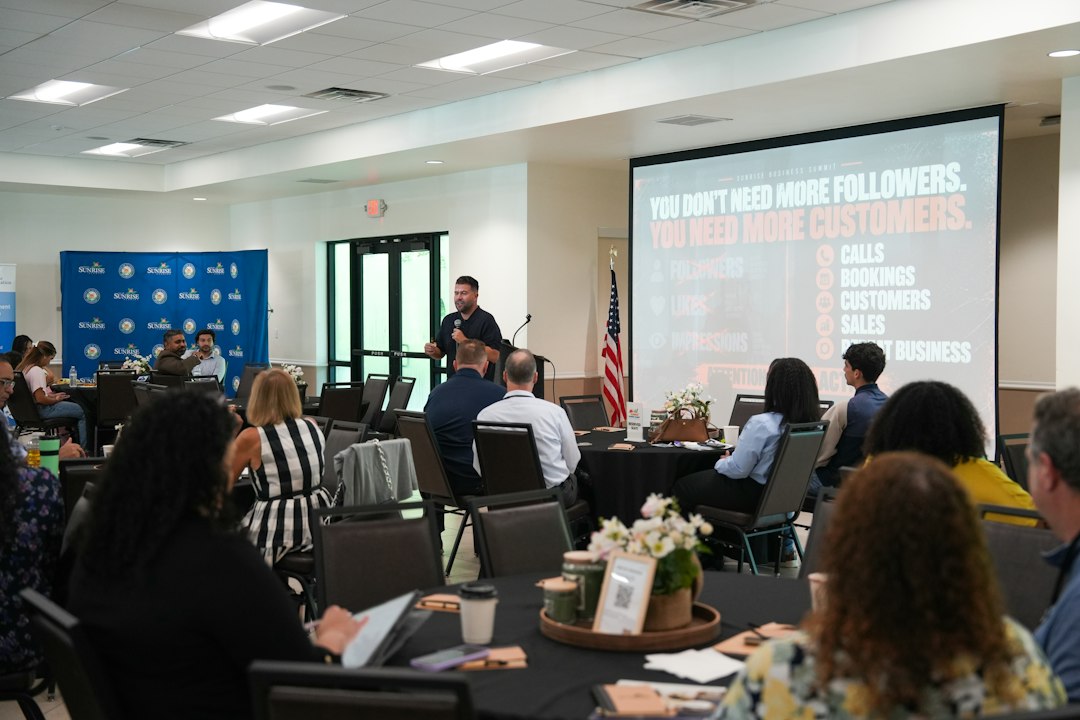
Trust is built through repeated, predictable interactions. For AI Avenue, that means regular opportunities for local businesses and tech leaders to share space and shape plans together.
Rituals That Make Collaboration Real
- Monthly open houses: Rotating hosts—one tech firm, one local business—so each side learns the other’s world.
- Neighborhood briefings: Short, jargon-free updates on new projects, delivered at community spaces.
- Shared celebrations: Launch days for successful AI pilots that visibly feature the business owners involved.
- Feedback windows: Time-bound periods where residents can comment on proposed changes and expect a timely response.
Final Thoughts
AI Avenue represents more than a branding exercise for Pittsburgh; it is a test of whether advanced technology can be woven into the fabric of a city without tearing that fabric apart. Tech leaders want a corridor that showcases AI excellence and draws capital and talent. Local businesses want stability, new customers, and tools that help them survive and grow. Those goals are not inherently in conflict, but alignment will not happen by accident.
If Pittsburgh can root AI Avenue in street-level value, inclusive governance, and protections against displacement, it can set a model for other cities wrestling with the same questions. The pathway forward is less about hype and more about practical experiments, transparent trade-offs, and ongoing conversation. In that sense, the real innovation is not just in the AI, but in how a city chooses to organize around it.
Editorial note: This article was inspired by ongoing coverage of Pittsburgh’s emerging “AI Avenue” initiative and the dialogue between local businesses and tech leaders. For more context, see the original reporting at technical.ly.