Humanoid Robots in the Kitchen: How Silicon Valley Is Automating Cooking
Robots have long washed dishes and moved pallets, but a new wave of humanoid machines is training for a more delicate job: cooking and handling food. In Silicon Valley and other tech hubs, startups are teaching general‑purpose robots to chop, stir, plate and clean in restaurant kitchens and test homes. This shift raises big questions about cost, safety, quality and the future of work in food service. This article breaks down how humanoid kitchen robots operate, where they fit today, and how they may change what it means to have a "cooking job" in the coming decade.
From Industrial Arms to Humanoid Cooks
For decades, robots in food and beverage have been hidden in the background: conveyor belts in factories, automated fillers for soda bottles, or dishwashing lines in large institutions. What is new today is the push toward humanoid robots that operate in the same physical spaces and workflows as human cooks. Instead of building entirely new automated kitchens, Silicon Valley startups are betting on robots that can learn to use the tools and layouts we already have.
These robots are designed to walk, reach shelves, grab pans, open refrigerators and operate stoves much like a human worker. The premise is simple but ambitious: if a robot can move and sense like a person, then software updates—rather than custom hardware—can unlock new tasks, from flipping burgers to carefully plating desserts.
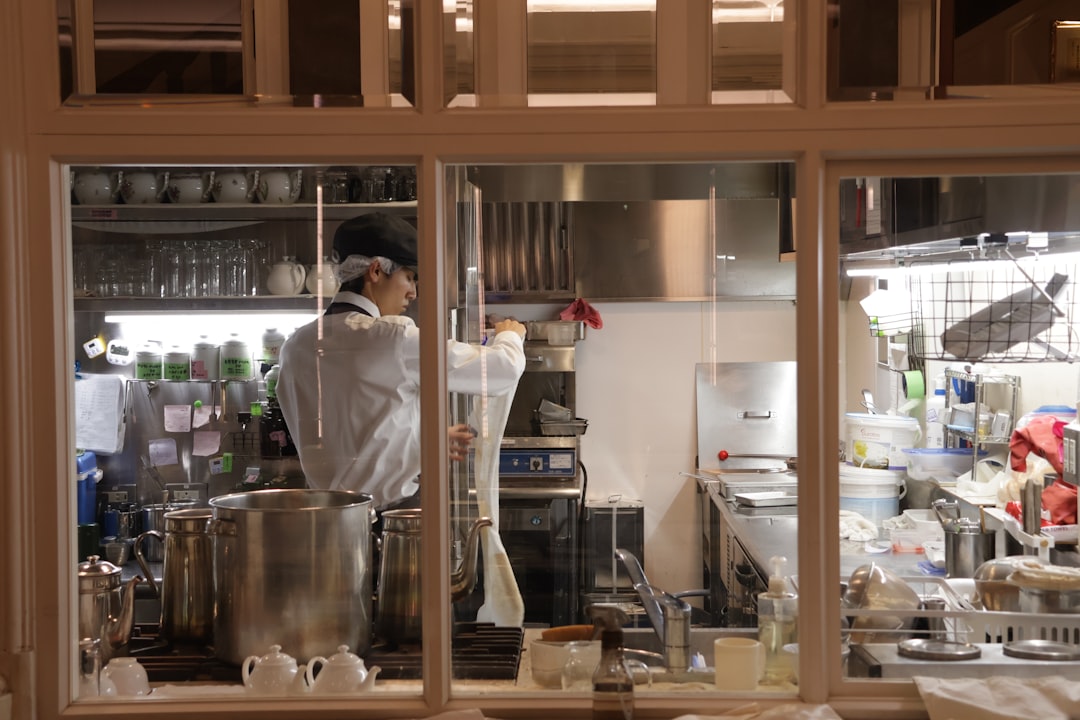
Why Kitchens Are the Next Frontier for Humanoid Robots
Restaurant kitchens are chaotic, hot, cramped and fast-paced. In theory, that makes them a terrible place to test delicate high-tech machines. Yet several powerful forces are pushing robotics companies and restaurant operators together.
Labor Pressures in Food Service
Across many regions, food service employers report difficulty hiring and retaining staff for repetitive or physically demanding roles. Turnover is notoriously high, and training new staff can be costly. Humanoid robots are being pitched as a way to absorb some of that pressure by handling predictable, lower-skill tasks.
- High turnover: Kitchen roles, especially entry-level prep and line positions, churn frequently.
- Irregular hours: Late nights, weekends and holidays are hard to staff consistently.
- Physical strain: Lifting heavy pots, standing all day and working over hot surfaces leads to fatigue and injuries.
Robots do not eliminate these challenges, but they can reduce the number of positions that must be filled at odd hours, and they can take on the most repetitive or hazardous tasks.
The Appeal of Standardization
Food brands and restaurant chains depend on consistency: the burger you order today should taste like the one you had last month. Human cooks can deliver that, but they inevitably introduce variation. Robots, when properly calibrated, excel at repeating standardized motions and timing.
- Precisely timed frying and baking, down to the second.
- Exact portioning of ingredients and sauces.
- Consistent cutting, mixing and plating motions.
In the long term, operators hope this consistency will reduce waste, improve margins and keep customer expectations aligned across locations.
What Exactly Is a Humanoid Kitchen Robot?
The term "humanoid" covers a spectrum of machines, from devices that only roughly resemble the human body to highly articulated robots with fingers and facial expressions. In the kitchen context, the focus is on robots with a general-purpose body that can navigate human environments.
Core Physical Capabilities
Most humanoid kitchen robots share several design goals:
- Bipedal or quasi-bipedal mobility: The ability to traverse flat floors, small ramps and occasional obstacles.
- Human-reach manipulation: Arms that can reach countertops, shelves and appliances at standard kitchen heights.
- Grasping tools and containers: Hands or grippers suited for pans, spatulas, ladles, bowls and packaging.
- Safety-aware motion: Built-in force limits and sensors to avoid bumping into people in tight spaces.
Unlike fixed industrial arms, these robots are meant to be wheeled or walked into an existing back-of-house area and integrated with minimal layout changes.
Sensing and Perception in a Messy Environment
Kitchens challenge machine perception: steam clouds cameras, shiny metal confuses depth sensors, and ingredients constantly change shape. To manage this, humanoid robots typically combine several sensing modes:
- 3D cameras and LiDAR for mapping the kitchen and tracking obstacles.
- RGB cameras for recognizing tools, ingredients and labels.
- Force and torque sensors in joints for precise stirring, cutting and grabbing.
- Temperature and proximity sensors to avoid burns or contact with hot surfaces.
These sensor streams feed into AI models that attempt to understand where items are, what they are, and how they are moving—crucial to operating safely around human colleagues.
How Robotic Cooks Learn Kitchen Tasks
Teaching a robot to make a single dish by hard-coding every possible movement is both fragile and expensive. Instead, companies are leaning on modern AI techniques to help humanoid robots learn from data.
Imitation Learning from Human Chefs
One common approach is imitation learning, where robots observe and copy human demonstrations. Engineers record expert cooks preparing meals using multiple cameras and sensors on tools and surfaces. These recordings capture:
- Sequences of movements—how a cook chops, stirs, flips and plates.
- Timing between steps—when to lower the heat or add ingredients.
- Adjustments to variations—how the cook responds if something spills or cooks faster than expected.
Machine learning models then map these demonstrations to robot actions, translating a chef’s arm motions into commands for robotic joints and grippers. Over time, the robots refine these skills by practicing in test kitchens or simulation environments.
Recipe-Level Reasoning
Beyond copying movements, robots need to understand the structure of tasks: recipes, prep sequences and kitchen workflows. AI planning systems break dishes down into steps—fetch ingredients, measure, cook, plate—and then schedule those steps efficiently. This higher-level reasoning is where language models and symbolic planners often come into play, helping the robot decide what to do next, not just how to move.
Continuous Improvement via Data
As robots operate in real kitchens, they generate streams of data about execution times, errors and edge cases. Companies can aggregate this data across multiple installations and update their software. In theory, the robot in one restaurant can benefit from a tricky issue that was solved in another—such as reliably flipping a fragile type of fish or handling a new kind of packaging.
Typical Kitchen Tasks Robots Are Tackling First
Despite futuristic marketing, today’s humanoid kitchen robots are not master chefs. Instead, they focus on a narrow set of predictable, high-volume tasks that deliver quick value while limiting risk.
Repetitive Prep Work
Prep tasks are ideal because they are repetitive, time-consuming and can often be isolated from direct guest impact:
- Chopping vegetables into consistent shapes and sizes.
- Mixing batters, sauces or dressings.
- Portioning proteins or dough into standardized units.
- Prepping garnishes and assembling ingredient trays.
By offloading these tasks, human staff can focus more on cooking, plating and customer-facing roles.
Line Cooking in Controlled Stations
Some robots are being trained to work on specific stations of the line where the environment can be tightly controlled:
- Fry stations: Loading baskets, monitoring cook times, shaking and draining, then transferring items to holding areas.
- Grill or flat-top: Placing patties or items, flipping at set intervals, and tracking doneness using sensors.
- Simple assembly: Adding standardized toppings or sides to plates or trays.
These are high-throughput stations where timing is critical and processes are already highly standardized, making them easier to automate.
Cleaning and Closing Tasks
Late-night cleaning and breakdown is often the least popular part of kitchen work. Humanoid robots are well-suited to repetitive, low-skill cleaning jobs when safety can be assured:
- Wiping down prep tables and some appliances.
- Transporting dishes to washing areas or loading dishwashers.
- Taking out trash or recyclables in controlled paths.
These tasks can be scheduled for off-hours, when the kitchen is quieter and robots have more freedom to move.

Humanoid Robots vs. Specialized Kitchen Machines
Kitchen automation is not new. Conveyor ovens, automatic rice cookers, programmable coffee machines and burger-flipping arms have existed for years. The debate now is whether to invest in general-purpose humanoids or single-purpose machines that do one job extremely well.
| Aspect | Humanoid Kitchen Robots | Specialized Kitchen Machines |
|---|---|---|
| Flexibility | Can be reprogrammed for many tasks and stations over time. | Optimized for one or a few tasks; difficult to repurpose. |
| Integration | Uses existing tools and layouts with minimal remodeling. | Often requires custom layout, ventilation or power integration. |
| Upfront Cost | Typically higher per unit; may substitute for multiple roles. | Lower per machine but multiple units needed for different tasks. |
| Maintenance | Complex hardware and software; needs specialized support. | Generally simpler; service contracts more standardized. |
| Longevity | Can gain new abilities via software updates. | Function tends to remain fixed; may be replaced as needs change. |
In practice, many future kitchens may blend both: a humanoid robot handling variable tasks and legacy machines delivering specific, high-efficiency functions.
Economic Trade-Offs: Cost, ROI and Scale
Any serious discussion about robot cooks must grapple with economics. Humanoid robots are currently expensive to build and maintain, but they can operate for long hours and perform several roles under one “body.”
Key Cost Components
- Upfront hardware price: The robot platform itself, often priced comparable to a small car or more in early generations.
- Software and subscriptions: Fees for control software, updates and AI services.
- Installation and integration: Site surveys, mapping, training and potential minor retrofits.
- Maintenance and repairs: Replacement parts, scheduled servicing and on-call support.
Where ROI May First Make Sense
Early adopters are likely to be organizations where labor costs are high, tasks are highly standardized and volumes are significant, such as:
- Large quick-service and fast-casual restaurant chains.
- Centralized commissary kitchens serving multiple outlets.
- Corporate or institutional cafeterias with predictable menus.
In these settings, even modest improvements in throughput, waste reduction or staffing flexibility can compound across locations and years, potentially justifying pilot deployments.
Quick Framework: Is Your Kitchen a Candidate for Robots?
If at least three of these are true—highly repetitive prep, consistent menu, predictable volume, staffing shortages, and a willingness to adjust workflows—you may be positioned to test humanoid kitchen robots in limited roles before wider rollout.
Safety, Hygiene and Regulation
Putting powerful machines near sharp tools, hot oil and human workers raises serious safety and hygiene concerns. Successful deployment of humanoid kitchen robots depends on addressing both.
Worker and Guest Safety
Robots in shared spaces must be conservative in their movements and responsive to sudden changes in their environment. Common safety measures include:
- Geofencing: Virtual boundaries that limit where robots can move.
- Speed and force limits: Slower, softer movements around people to minimize injury risk.
- Emergency stop controls: Physical buttons and remote options for instant shutdown.
- Real-time tracking: Constant monitoring of nearby humans and obstacles.
As deployments spread, regulators and safety bodies are likely to update guidelines that address humanoid robots specifically, similar to how industrial cobots are regulated today.
Food Safety and Cleanability
In food environments, cleanliness is just as important as physical safety. Robots must avoid contaminating food and be easy to keep sanitary.
- Surfaces and grippers designed to be cleaned and sanitized regularly.
- Protocols for avoiding cross-contamination between raw and cooked items.
- Clear separation between components that touch food and those that do not.
Because regulations vary by region, operators and robotics providers need to work with local health departments to develop acceptable cleaning and operating procedures.
What This Means for Kitchen Jobs
Perhaps the most sensitive question is how humanoid robots will affect employment. While marketing often emphasizes “assistance” rather than replacement, some tasks currently done by humans will inevitably be automated.

Tasks Likely to Be Automated First
Roles and activities with the following characteristics are prime automation targets:
- Highly repetitive, with little variation from day to day.
- Physically strenuous but not reliant on high-level creativity.
- Isolated from direct customer interaction.
Think bulk chopping, dish transport and standard fry or grill cycles under close supervision.
New and Evolving Human Roles
At the same time, new categories of work are likely to emerge around kitchen robots:
- Robot supervisors: Staff members trained to assign tasks, monitor status and handle basic troubleshooting.
- Hybrid cooks: Chefs who rely on robots for repetitive prep while focusing on flavor, presentation and menu innovation.
- Maintenance coordinators: On-site leads who manage cleaning routines, inspections and service visits.
For many workers, future kitchen work may be less about constant physical labor and more about coordination, quality control and customer experience.
Step-by-Step: How a Restaurant Might Pilot a Humanoid Robot
For operators curious about this technology, a thoughtful pilot is far better than a rushed full-scale deployment. A structured approach reduces disruption and helps isolate the true benefits and limitations.
- Define the problem clearly. Identify specific pain points—staffing gaps at certain hours, repetitive prep backlogs, or bottlenecks on particular stations.
- Engage stakeholders early. Involve kitchen staff, managers, safety officers and, if applicable, union representatives in the discussion so expectations are clear.
- Select narrow tasks. Choose 1–3 repetitive tasks in controlled areas that are easy to monitor, such as chopping or a single fry station.
- Work with the vendor on layout. Allow time for site surveys, mapping, minor layout adjustments and safety reviews.
- Train staff to work with the robot. Provide clear instructions on assigning tasks, pausing operations, cleaning and emergency procedures.
- Measure outcomes. Track metrics like task completion time, error rates, food waste, staff satisfaction and guest feedback.
- Iterate or scale. Use pilot results to adjust workflows, expand tasks, or, in some cases, decide that automation is not yet a fit.
What Home Kitchens Might See (Eventually)
Most near-term activity is in commercial kitchens, where volumes and labor structures better support early robot deployments. Still, many people wonder whether they will eventually see humanoid robots in domestic kitchens.
Several technical and economic hurdles stand in the way: home kitchens are highly variable in layout, the economics of a single household are very different from a restaurant, and expectations for safety and aesthetics are higher. However, the same underlying technologies—perception, manipulation and planning—could, over time, make their way into consumer products in more limited forms, such as advanced cooking assistants or mobile appliances with some humanoid characteristics.
Signals to Watch in the Next 5 Years
Because humanoid robots are still early in their lifecycle, much can change quickly. A few signals will indicate whether kitchen automation is moving from novelty to infrastructure.
- Multi-location deployments: Robots moving beyond single pilot sites to regional or national rollouts.
- Training time: How quickly new tasks or recipes can be added with software updates alone.
- Regulatory frameworks: Emerging standards and guidelines specifically referencing humanoid robots in food environments.
- Worker sentiment: Whether staff view robots as burdens, threats or helpful teammates.
- Cost curves: Evidence that hardware and service costs are falling as production scales.
Positive movement across several of these dimensions would suggest that humanoid kitchen robots are becoming a lasting part of the food-service landscape rather than a short-lived experiment.
Final Thoughts
Humanoid robots in the kitchen sit at the intersection of advanced AI, mechanical engineering, economics and social change. Today, they are experimental assistants, learning to chop, stir, fry and clean in constrained roles. Tomorrow, they could become core infrastructure in high-volume restaurants and commissary kitchens, reshaping how food is prepared and which human skills are most valuable on the line.
For now, the most realistic view is that robots will complement rather than fully replace human cooks, especially in environments that prize creativity, hospitality and rapid improvisation. As Silicon Valley continues to refine humanoid platforms and as early adopters share lessons from real kitchens, everyone—from chefs to diners to policymakers—will have a stake in deciding how far and how fast this new generation of robotic coworkers moves from the lab into everyday life.
Editorial note: This article is an independent analysis inspired by reporting on humanoid robots entering kitchen work. For background reading, see the original coverage at Los Angeles Times.