Your Next Customer Will Ask AI About Your Business: How To Shape the Answer
Before many customers visit your website, they now ask AI tools like ChatGPT or search assistants about you. Those answers are becoming as influential as search results or online reviews. This guide explains how AI decides what to say about your business and gives you specific steps to shape those answers so they’re accurate, up-to-date, and in your favor.
Why AI Answers Now Matter as Much as Search Results
Potential customers increasingly ask AI tools questions like “Is this company trustworthy?”, “Does this restaurant offer gluten-free options?”, or “Which agency is best for a small startup budget?”. Instead of clicking through multiple sites, they accept the AI’s short, confident answer.
Those answers are powered by the open web: your website, business listings, reviews, social posts, and even local news. If your business data is missing, outdated, or inconsistent, AI has to guess — and guesses can cost you customers.
Shaping what AI says about your business is not about manipulating the truth. It’s about supplying clear, consistent, and well-structured information so that AI can represent you accurately and fairly whenever someone asks.
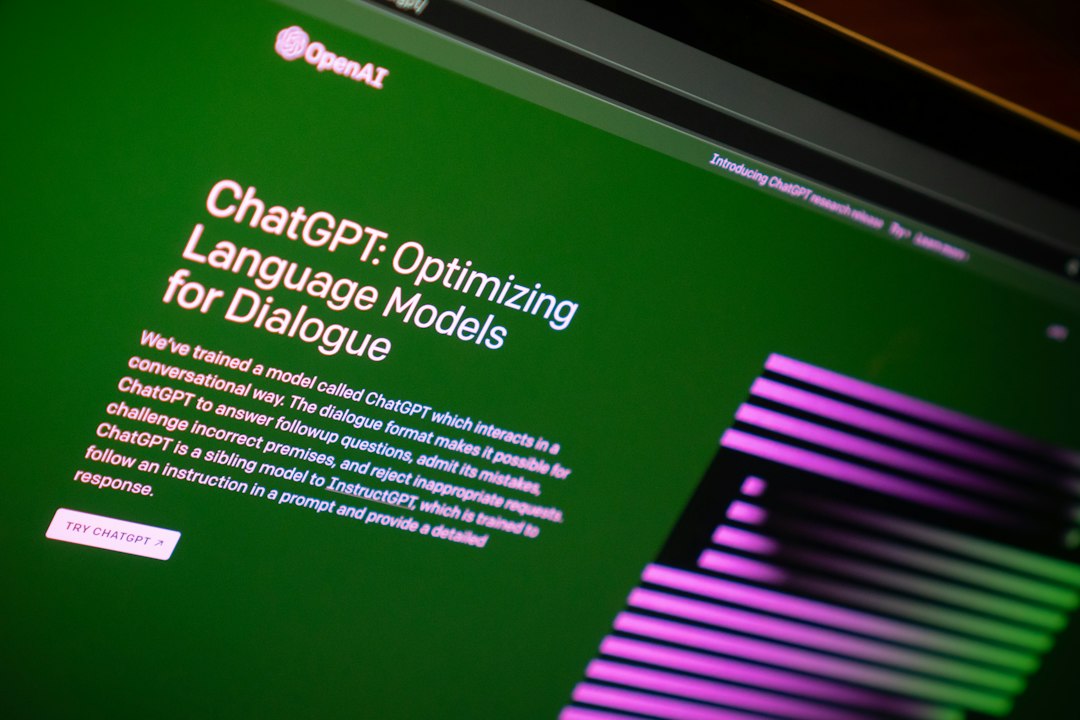
How AI Systems Decide What to Say About Your Business
Modern AI assistants do not “know” your business personally. They synthesize information from multiple signals and sources. While each platform is different, most use a combination of:
- Public web content – your website, blogs, FAQs, and any crawlable pages.
- Business listings – major directories like Google Business Profile and others, which AI often treats as reference points.
- News and press – local coverage, industry articles, and announcements.
- Reviews and ratings – especially patterns that match the question being asked (e.g., “customer service”, “shipping time”).
- Authority signals – how widely your information is cited and whether it’s consistent across sources.
From these inputs, the AI compresses information into a short narrative: a summary, a recommendation, or a ranked suggestion list. If the available data is thin or contradictory, the narrative is more likely to be inaccurate or generic.
The AI Reputation Risk: What Can Go Wrong
When AI answers questions about your business, several problems can arise if you are not actively managing your digital presence:
- Outdated details – old opening hours, discontinued products, or services you no longer offer.
- Missing services – new offerings not clearly described on your site or anywhere else AI can read.
- Over-weighted negative reviews – a handful of bad experiences dominating the narrative.
- Location confusion – wrong address, incorrect coverage area, or mis-identified local market.
- Brand mix-ups – your business confused with another with a similar name.
None of this requires malice. It can happen simply because AI has nothing better to work with. Your job is to give it better material.
Step 1: Audit What AI Already Says About You
Before you change anything, discover your current AI footprint. Treat this like a reputation audit.
- Ask different AI tools – Try popular chatbots and search assistants. Ask questions a real customer would ask (see below).
- Vary the phrasing – “Is <brand> reliable?”, “Does <brand> offer <service>?”, “Best <category> near me”.
- Capture the answers – Take screenshots or paste answers into a document for comparison over time.
- Highlight errors and gaps – Mark incorrect facts, missing services, or unfair emphasis on old issues.
- Note which sources are cited – Some tools show reference links; these are the sites you must prioritize.
This baseline shows you what customers may already be seeing and gives you a checklist of issues to fix.
Step 2: Fix the Foundations on Your Own Website
Your website is the single most important asset you control. AI uses it as a primary reference, especially when it’s clear, structured, and consistent.
Make Your Key Facts Impossible to Miss
Ensure your core business details are prominent and up to date:
- Clear description of what you do, who you serve, and where you operate.
- Accurate contact details: address, phone, email, social channels.
- Opening hours or service times, including holidays if relevant.
- Current product or service list with brief, plain-language explanations.
- Trust signals: certifications, guarantees, notable clients or partners.
Use an FAQ That Mirrors Real Questions
AI tools love question-and-answer formats. Build a short FAQ that echoes how customers speak:
- “Do you offer same-day service in <city>?”
- “What industries do you specialize in?”
- “Do you have gluten-free / eco-friendly / family options?”
The more your site reflects natural-language questions and clear answers, the easier it is for AI to quote or summarize correctly.
Step 3: Make Your Data Machine-Readable with Structured Markup
AI assistants and search engines parse not only visible text but also structured data. This is usually added through schema markup (for example, JSON-LD) that describes your business in a standardized way.
Key Schema Types for Most Businesses
- LocalBusiness (or more specific variants like Restaurant, Store, MedicalOrganization).
- Organization for brands without a physical storefront.
- Product and Service for core offerings.
- FAQPage for your Q&A content.
Copy-Paste Starter: LocalBusiness JSON-LD Schema
{ "@context": "https://schema.org", "@type": "LocalBusiness", "name": "Your Business Name", "description": "Short, clear description of what you do.", "image": "https://example.com/logo.jpg", "telephone": "+65-1234-5678", "address": { "@type": "PostalAddress", "streetAddress": "123 Example Street", "addressLocality": "Singapore", "postalCode": "123456", "addressCountry": "SG" }, "url": "https://example.com", "openingHours": "Mo-Fr 09:00-18:00" }
Add this (with your details) into your site’s <head> as a <script type="application/ld+json"> block. While this doesn’t guarantee a specific AI answer, it gives systems a reliable, machine-readable source of truth.
Step 4: Align Your Business Listings and Directories
Business directories act like public records that AI can cross-check. Inconsistencies between them can lead to confusion or outdated answers.
Prioritize These Profiles
- Search engine business listings (e.g., Google Business Profile).
- Major map or review platforms in your region.
- Industry-specific directories (legal, medical, hospitality, B2B, etc.).
Sync these with your website data: same name, address, phone, categories, and hours. Upload recent photos and write concise descriptions that echo your site’s main wording.
Step 5: Manage Reviews as AI Training Data
To AI, reviews are not just stars; they are text that describes experiences. A small number of detailed complaints can heavily influence the narrative.
Turn Reviews into a Balanced Story
- Invite feedback consistently after a purchase or project, not just after major wins.
- Respond professionally to negative reviews, acknowledging issues and explaining resolutions.
- Highlight improvements when you fix recurring problems, both in responses and on your site.
AI systems may quote or paraphrase these texts. When your responses are calm, factual, and solution-focused, they help counterbalance historical issues and show that the business learns and improves.
Step 6: Publish Content That Reinforces Your Expertise
Beyond core pages, AI looks for context that explains why you’re a good answer for a given query. Helpful, specific content can position you as the natural recommendation.
Useful Content Types
- How-to articles or guides addressing your customers’ biggest practical problems.
- Case-study style stories (without sensitive details) that show outcomes.
- Short explainers clarifying confusing topics in your field.
Keep jargon light and emphasize outcomes: money saved, time reduced, reliability improved. AI tends to favor content that clearly links what you do to measurable benefits.
Step 7: Compare Channels: Where to Focus Your Effort
Not every channel has equal influence for every business. The table below summarizes where most companies should start when trying to shape AI-driven perception.
| Channel | Primary Role for AI Answers | Effort Level | Priority for Most SMEs |
|---|---|---|---|
| Company Website | Source of truth for facts, services, and FAQs | Medium (content + tech) | Very High |
| Business Listings | Verify location, hours, and core details | Low–Medium | High |
| Online Reviews | Reflect customer experience and reliability | Ongoing | High |
| Social Media | Additional context, brand personality | Medium–High | Medium |
| News & PR | Authority, milestones, and reputation | Medium–High | Medium |
Step 8: Create a Simple Quarterly AI Checkup Routine
AI models and their data sources evolve. A one-time cleanup is not enough. Build a light, repeatable routine so you can catch changes early.
Quarterly Checklist
- Re-run your AI queries and note new errors or improvements.
- Update your website for any changes in services, pricing approach, or policies.
- Refresh schema markup if you alter key details.
- Review top directories for consistency.
- Scan reviews for new themes and respond where needed.

What You Should Not Expect from AI Control Efforts
Even with best practices, you cannot fully control AI outputs. These systems are probabilistic and blend data from many places. It’s important to set realistic expectations.
Limitations to Keep in Mind
- You cannot force an AI to rank you #1 in a list of options.
- You cannot permanently delete factual, public information about past issues.
- You cannot guarantee that every answer will use your preferred wording.
What you can do is reduce avoidable errors, ensure your strengths are visible, and demonstrate ongoing responsiveness to customer needs. Over time, this shifts the balance of information in your favor.
Final Thoughts
AI has quietly become a new front door for your business. Long before some customers read your homepage, they will have read a sentence or two about you written by a model. Those sentences are shaped by the clarity, consistency, and credibility of your digital footprint.
Treat AI not as a mysterious black box but as a powerful summarizer of the public record. Strengthen that record: update your site, structure your data, align your listings, manage reviews, and keep publishing helpful content. Then, review what AI says about you regularly. Businesses that adapt to this new layer of reputation will earn trust faster, reduce confusion, and turn AI-assisted searches into real-world customers.
Editorial note: This article was inspired by coverage from Yahoo News Singapore on how customers use AI to research businesses. For more context, see the original report at Yahoo News Singapore.