From Predictive Maintenance to Network Automation: How AI Is Reshaping Telecom Operations
Telecom networks are under relentless pressure: more users, more data, and tighter expectations on reliability and speed. Artificial intelligence is becoming the hidden engine that keeps these complex systems running, shifting operators from reactive firefighting to proactive, data-driven control. This article explores how AI is already reshaping telecom operations, from predictive maintenance to full network automation, and what it practically means for operators and their customers.
Why AI Matters Now in Telecom Operations
Telecom operators run some of the world’s most complex, large-scale technical systems. These networks span radio sites, backhaul links, core networks, data centers, and a growing layer of cloud-native services. Traditional tools and manual workflows can no longer keep up with the volume of data, speed of change, and customer expectations. This is where artificial intelligence (AI) and machine learning (ML) are rapidly stepping in.
AI in telecom is not just a buzzword; it is a practical toolkit for making infrastructure more reliable, easier to operate, and more efficient. From predicting failures before they happen to dynamically tuning network parameters in real time, AI is becoming a core component of day-to-day operations and long-term planning.

From Reactive to Predictive: Maintenance Gets an AI Upgrade
Historically, maintenance in telecom has been a mix of scheduled checks and reactive troubleshooting. A base station fails, an alarm is triggered, a technician is dispatched, and customers experience degraded service or outages in the meantime. AI allows operators to flip this model from reactive to predictive.
How Predictive Maintenance Works in Telecom
Predictive maintenance uses statistical models and ML algorithms trained on operational data to anticipate when equipment is likely to fail or degrade. The core idea is to take action before an incident impacts customers.
- Data collection: Network elements, sensors, power systems, and environmental monitors continuously send telemetry — temperatures, error counters, performance stats, and logs.
- Feature extraction: Relevant signals are derived from raw data, such as abnormal temperature rise, increasing retransmission rates, or power consumption anomalies.
- Model training: Historical incidents are used to teach models what patterns typically precede failures.
- Real-time scoring: The models run continuously on incoming data, generating risk scores or health indices for each asset.
- Action and automation: When risk crosses a threshold, the system can raise a ticket, recommend interventions, or directly trigger workflows.
Typical Predictive Maintenance Use Cases
- Radio site health monitoring: Predicting power amplifier degradation, antenna misalignment, or cooling failures at cell towers before they cause outages.
- Battery and power systems: Forecasting backup battery end-of-life in remote sites so replacements are scheduled ahead of storms or grid instability.
- Backhaul links: Spotting early signs of fiber degradation or microwave interference that could lead to capacity drops.
- Data center hardware: Anticipating disk, server, or switch failures in telecom data centers hosting core and IT workloads.
Operational Benefits of Predictive Maintenance
Predictive maintenance is often the first AI use case telecom operators implement because its benefits touch both operations and finance:
- Reduction in unplanned outages and SLA violations.
- Better planning of field technician visits and spare parts logistics.
- Longer asset lifetimes by avoiding over-maintenance or misuse.
- Lower operations costs by focusing engineers on high-risk assets.
Quick Checklist for Starting Predictive Maintenance
1) Inventory your critical network assets. 2) Map where telemetry is available or missing. 3) Consolidate historical alarms, tickets, and failure logs. 4) Start with one asset type (e.g., RAN sites) to prove value before scaling.
AI-Driven Network Automation: Beyond Scripts and Rules
Telecom networks used to be managed with static configurations and manual changes. Even early automation efforts leaned heavily on brittle scripts and fixed rules. AI-driven network automation goes further by using data and learning algorithms to make more adaptive, context-aware decisions.
From Element-Level Tasks to Intent-Based Automation
Instead of individually configuring thousands of devices, operators are moving towards intent-based approaches: you define the outcome you want, and the automation system figures out how to make the network behave accordingly.
AI strengthens this approach in several ways:
- Policy inference: Automatically learning which parameter combinations lead to better performance under specific conditions.
- Dynamic policy adaptation: Adjusting policies as traffic patterns, device types, or applications change.
- Exception handling: Detecting and resolving unusual situations where static rules would fail or conflict.
Closed-Loop Network Automation
Closed-loop automation connects monitoring, analysis, decision-making, and execution in a continuous cycle:
- Observe: Collect performance, fault, and usage data from the network.
- Analyze: Use AI models to detect issues or optimization opportunities.
- Decide: Select the best action: re-route traffic, adjust power, change scheduling, etc.
- Act: Apply configuration changes through orchestrators or SDN controllers.
- Learn: Evaluate the impact and refine the models over time.
Such loops can operate at different timescales — from near real-time adjustments to daily optimization cycles — depending on the use case.
AI in the Radio Access Network: Self-Optimizing and Self-Healing
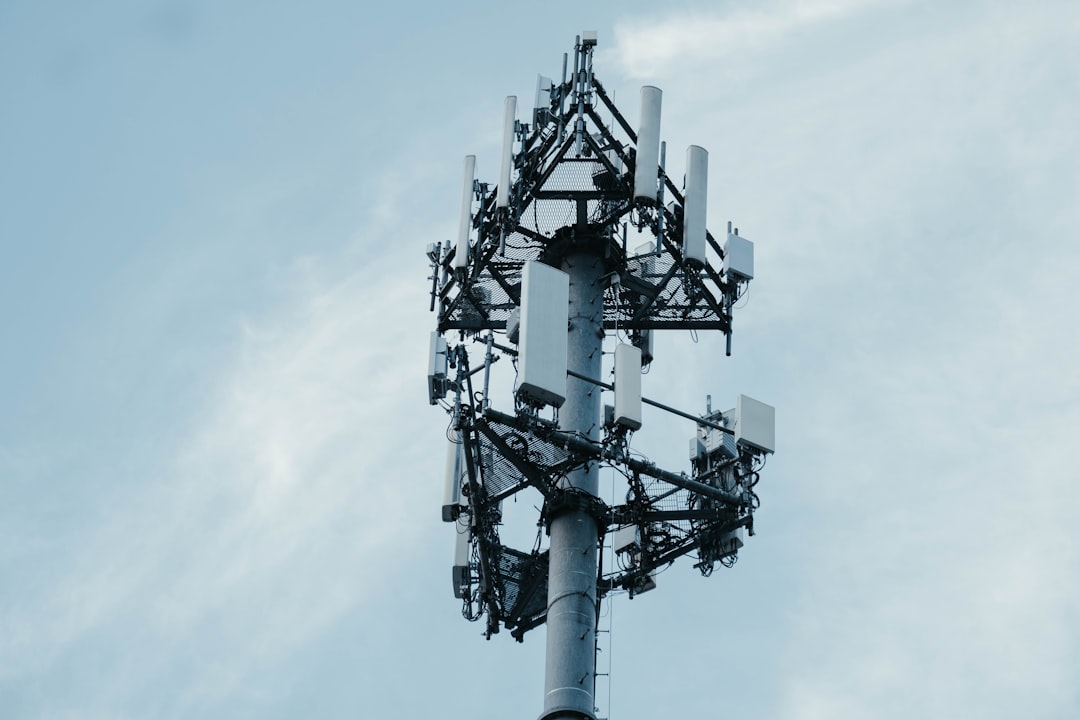
The Radio Access Network (RAN) consumes a significant portion of a telecom operator’s capital and operating expenditure. It is also where customers most directly experience performance. AI has become central to making RAN more adaptive and efficient.
Self-Optimizing Networks (SON)
Self-Optimizing Networks use algorithms to automatically tune RAN parameters. AI and ML enhance SON capabilities beyond deterministic rule sets.
- Coverage and capacity optimization: Using AI to adjust antenna tilt, transmit power, and neighbor relations to balance load between cells and reduce coverage holes.
- Mobility robustness: Improving handover parameters by analyzing dropped-call patterns, signal strengths, and user speeds.
- Interference management: Dynamically coordinating frequencies and power in dense urban deployments to reduce interference.
Self-Healing Capabilities
AI can detect patterns indicating partial failures or misconfigurations in the RAN and trigger corrective actions before customers are seriously affected.
- Identifying cells with abnormal KPIs (e.g., call drops, low throughput) even if thresholds have not yet been crossed.
- Rolling back recent configuration changes that correlate with performance degradation.
- Automatically re-routing traffic to neighboring cells when one site degrades.
5G and Beyond: Why AI Is Essential
5G introduces far more configuration options, slicing, and massive MIMO capabilities, making manual optimization practically impossible at scale. AI-driven RAN management is becoming a necessity to:
- Handle dense small-cell deployments.
- Support network slicing with different performance targets.
- Respond to rapid shifts in demand (events, mobility, time-of-day variations).
AI in the Core and Transport Network
While the RAN is highly visible, the core and transport domains are equally critical. These layers handle routing, subscriber management, policy enforcement, and connectivity between sites and clouds. AI here focuses on traffic engineering, resilience, and service assurance.
Traffic Prediction and Capacity Planning
Core and transport networks must accommodate fluctuating traffic while avoiding congestion. AI models can forecast traffic patterns over multiple timescales, helping operators:
- Plan capacity upgrades in specific segments or peering points.
- Design routing policies that anticipate spikes (e.g., streaming events, software updates).
- Evaluate the impact of new services on backbone utilization.
Dynamic Traffic Engineering
AI-powered traffic engineering uses real-time telemetry and forecasts to adjust routing and bandwidth reservations proactively:
- Identifying likely congestion points before queues build up.
- Tuning MPLS, segment routing, or SD-WAN policies.
- Optimizing paths for latency-sensitive services (e.g., gaming, financial transactions).
Core Network Service Assurance
In virtualized and cloud-native cores, functions can be instantiated, scaled, and moved dynamically. AI helps maintain service quality by:
- Detecting anomalies in control-plane signaling or user-plane traffic.
- Correlating distributed logs and metrics across microservices.
- Recommending scaling actions or placement changes for network functions.
AI for Customer Experience and Service Operations
Telecom operations are not just about infrastructure; they are about customers. AI is increasingly used to smooth interactions, personalize services, and reduce the friction around support and billing.

Intelligent Customer Support
AI-driven tools can augment or partially automate customer care:
- Virtual assistants and chatbots: Handling routine queries like balance checks, plan information, or basic troubleshooting.
- Agent assist tools: Recommending responses, next-best-actions, and relevant knowledge base articles based on conversation context.
- Speech analytics: Analyzing call recordings to identify common issues, sentiment trends, and training needs.
Proactive Care and Experience Management
By correlating network performance data with customer accounts and usage, AI can anticipate dissatisfaction before a complaint is made:
- Flagging subscribers frequently exposed to poor coverage or slow data.
- Triggering targeted network optimization in high-value areas.
- Offering tailored remedies or upgrades when chronic issues are detected.
Revenue and Churn Analytics
AI can also provide insights into customer behavior and revenue dynamics:
- Predicting churn risk based on usage changes, complaints, and payment patterns.
- Recommending personalized offers more likely to be accepted.
- Detecting unusual usage that may indicate fraud or service abuse.
OSS/BSS Modernization with AI
Operational Support Systems (OSS) and Business Support Systems (BSS) form the software backbone of a telecom operator. Many operators still rely on heterogeneous, legacy platforms that are hard to integrate and slow to change. AI is becoming a key ingredient in modernizing these domains.
AI in OSS: Smarter Operations and Assurance
Within OSS, AI helps move from raw alarms and metrics to actionable insights:
- Root cause analysis that correlates alarms from multiple domains to a single underlying incident.
- Automated ticket classification, triage, and routing to the right teams.
- Change impact analysis, predicting which services or customers may be affected by planned work.
AI in BSS: Billing, Offers, and Collections
In BSS, AI can improve efficiency and customer satisfaction:
- Detecting anomalous billing patterns that may indicate errors or fraud.
- Optimizing discount and bundle strategies based on customer segments.
- Predicting payment delays and adjusting collection strategies.
Comparing Traditional vs AI-Driven Telecom Operations
AI does not replace foundational operations practices, but it does drastically change how work is prioritized and executed. The table below highlights some of the key differences.
| Aspect | Traditional Operations | AI-Driven Operations |
|---|---|---|
| Fault Management | Threshold-based alarms, manual correlation, reactive troubleshooting. | Anomaly detection, automated correlation, predictive alerts with root cause suggestions. |
| Network Optimization | Periodic audits, expert-driven parameter tuning, static policies. | Continuous optimization, data-driven policies, closed-loop adjustments. |
| Maintenance | Time-based schedules and break-fix interventions. | Condition and risk-based maintenance triggered by predictive models. |
| Customer Support | Call-centric, manual lookup of information, limited personalization. | Virtual assistants, agent assist, proactive outreach, individualized recommendations. |
| Planning | Spreadsheet-based forecasts and coarse traffic models. | Granular demand prediction using real usage patterns and behavioral data. |
Key Implementation Challenges
Despite its promise, implementing AI in telecom operations is not trivial. Operators face a mix of technical, organizational, and regulatory hurdles.
Data Quality and Integration
AI is only as good as the data it is trained and run on. In telecom environments:
- Data is often siloed across different OSS/BSS tools and vendors.
- Telemetry formats and semantics can vary widely between equipment types.
- Historical data may be incomplete, noisy, or poorly labeled.
Consolidating and standardizing data into accessible platforms (such as data lakes or streaming pipelines) is usually a foundational step.
Skills and Organizational Readiness
AI initiatives require both data science skills and deep telecom domain expertise. Challenges include:
- Shortage of staff who understand both ML concepts and network specifics.
- Need for new collaboration models between network engineering, IT, and data analytics teams.
- Change management as workflows are redefined and some manual tasks are automated.
Trust, Explainability, and Governance
Network engineers and operations teams need to trust AI recommendations, especially when they affect live networks:
- Opaque “black box” models can be hard to validate and troubleshoot.
- Regulatory frameworks may require auditable decision paths for certain actions.
- Governance policies must define where humans stay in the loop and where full automation is acceptable.
Vendor Ecosystem and Interoperability
Telecom environments typically involve multiple equipment vendors, software providers, and integrators. AI solutions must work across this heterogeneous ecosystem:
- Standardized data models and APIs are important to avoid lock-in.
- Multi-vendor interoperability testing becomes more complex when AI-driven behavior is involved.
Practical Steps for Operators Starting Their AI Journey
For operators who are at the beginning of their AI adoption curve, a structured, incremental approach works best. The goal is to demonstrate value quickly while building capabilities that can be scaled across domains.
A Phased Roadmap
- Assess and prioritize use cases: Identify operational pain points and rank them by potential impact and feasibility. Predictive maintenance, anomaly detection, and ticket automation are frequent early candidates.
- Build a data foundation: Inventory data sources, deploy or modernize data platforms, and establish governance for quality and access.
- Run pilots with clear success metrics: Select one or two domains (e.g., RAN optimization in a specific region) and define measurable KPIs such as reduced downtime or faster resolution times.
- Standardize and operationalize: Turn successful pilots into standard services with proper monitoring, documentation, and training.
- Expand automation depth: Gradually move from recommendation-only AI (human in the loop) to partial and then full automation where it is safe and beneficial.
- Continuously refine models: Incorporate feedback, new data sources, and changing network conditions into the models on an ongoing basis.
Best Practices to Increase Success Rates
- Start with problems that are well-understood and have abundant data.
- Ensure cross-functional teams: network experts, data scientists, and software engineers working together.
- Keep humans in the loop initially to build trust and gather labeled feedback.
- Document assumptions, model boundaries, and fallback procedures.
- Align AI initiatives with broader network transformation programs (such as virtualization or cloud migration).
Looking Ahead: AI and the Future of Autonomous Networks
The trendlines all point towards more autonomy in telecom networks. As AI capabilities mature and data platforms improve, networks will become more self-managing, self-optimizing, and self-healing. This does not mean humans disappear from operations; rather, their role shifts from performing repetitive tasks to supervising, designing, and improving automation systems.
Future developments may include:
- More fine-grained network slicing tailored to specific enterprise and IoT needs, dynamically orchestrated by AI.
- Tighter integration of edge computing, where AI runs close to users to optimize latency and local performance.
- Collaborative AI across operators, enabling better management of roaming and interconnect services.
In parallel, regulatory and industry bodies are likely to publish more detailed guidelines on the safe and transparent use of AI in critical communications infrastructure.
Final Thoughts
AI is steadily moving from experimental projects to a core role in telecom operations. Predictive maintenance reduces outages and costs, while network automation keeps increasingly complex infrastructures stable and efficient. At the same time, customer-facing AI improves support quality and allows more tailored services without overwhelming human agents.
Operators that take a pragmatic, data-driven approach — starting with targeted use cases and building toward end-to-end, closed-loop automation — will be best positioned to handle rising traffic, tougher performance requirements, and growing service diversity. AI will not remove the need for skilled telecom professionals, but it will meaningfully change how they work, enabling them to manage networks at a scale and sophistication that would otherwise be impossible.
Editorial note: This article is an independent analysis based on industry trends in AI and telecom operations. For related coverage and perspectives, see the original source at telecomtalk.info.