How AI Hand & Wrist Scans Are Reshaping Musculoskeletal Care
Artificial intelligence is starting to move from experimental pilots into everyday clinical workflows, and musculoskeletal care is one of the most active frontiers. With tools like Exer AI’s Exer Scan app introducing hand and wrist assessment modules at major health systems such as Mayo Clinic, computer vision is stepping closer to the point of care. This shift is less about replacing clinicians and more about giving them faster, structured insights. Understanding how these AI modules work, where they help, and where their limits lie is essential for any practice considering adoption.
From Experimental AI to the Exam Room
The announcement that Exer AI’s Exer Scan app now includes a hand and wrist module, introduced at an institution like Mayo Clinic, is a strong signal of where musculoskeletal (MSK) care is heading. Rather than confining AI to radiology workstations or back-office analytics, this type of tool brings computer vision directly to the point of care through a mobile device.
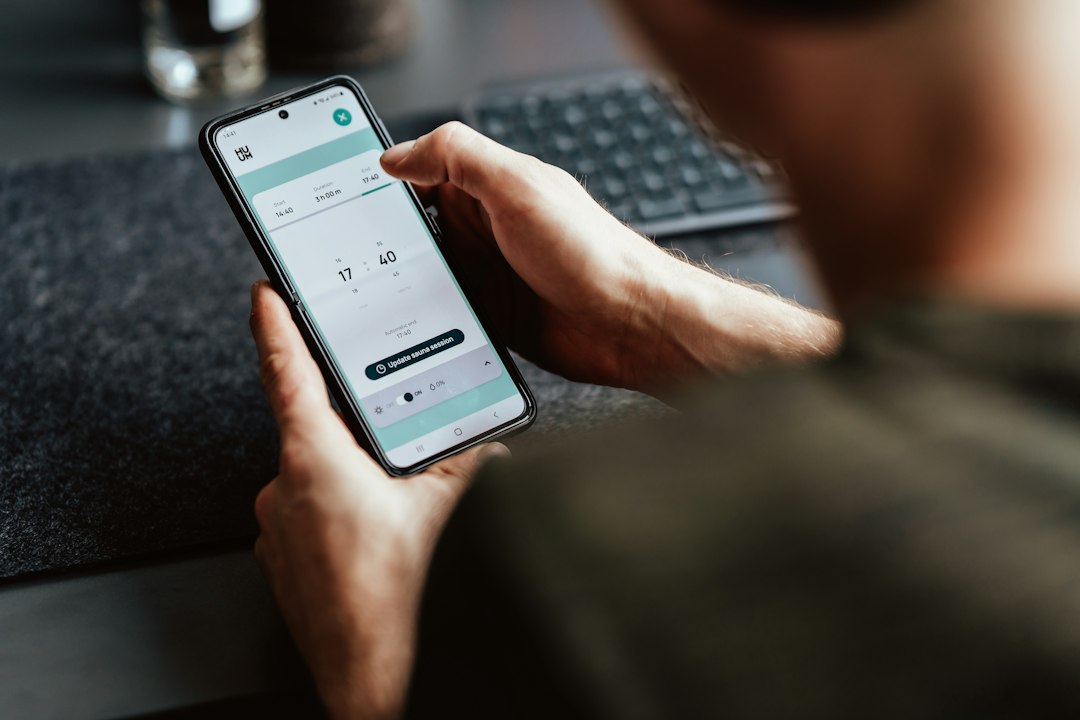
At its core, the idea is straightforward: use the camera on a smartphone or tablet, apply AI models trained on human movement and anatomy, and convert what the device "sees" into structured, clinically meaningful information. For hand and wrist complaints—a frequent reason for orthopedic, sports medicine, and primary care visits—this can help clinicians quantify function more quickly, triage cases, and document visits with less friction.
Why Hand and Wrist Conditions Are Ripe for AI Support
Hand and wrist issues are common, complex, and often time-consuming to evaluate thoroughly. They span everything from acute sports injuries to chronic overuse and degenerative conditions.
High-Volume, High-Complexity Presentations
Clinicians routinely encounter:
- Acute trauma, such as fractures, sprains, or tendon injuries after falls or sports accidents.
- Repetitive strain and overuse syndromes linked to work, gaming, or instrument use.
- Degenerative conditions like osteoarthritis that gradually limit range of motion and function.
- Nerve-related problems, including carpal tunnel syndrome or ulnar neuropathies.
Each presentation requires a focused history, inspection, palpation, range-of-motion testing, strength assessment, and often comparison with the contralateral side. Capturing these nuances accurately, and then re-assessing over time, is difficult in short appointment slots.
The Documentation and Data Gap
Despite the complexity, documentation for hand and wrist visits often ends up as brief narrative notes or loosely structured fields in the electronic health record (EHR). This creates several challenges:
- Limited objective baseline for follow-up, making it harder to judge progression or response to treatment.
- Inconsistent detail between clinicians, which can complicate shared care or hand-offs.
- Minimal reusable data that can feed quality-improvement efforts or research.
Computer vision-based AI modules are aimed squarely at this gap: they can observe hand and wrist motion, extract quantitative metrics, and generate consistent, structured outputs in real time.
How an AI Hand/Wrist Module Typically Works
While technical details vary between products, a hand and wrist module in an AI scan app usually follows a similar workflow: capture video, analyze motion, then translate findings into structured insights. The Exer Scan app, for example, uses AI to assess biomechanical movement through a mobile device camera; the newly announced hand/wrist module extends that principle to a smaller, more intricate anatomical region.
Step-by-Step: From Scan to Structured Output
- Guided capture – The app prompts the clinician or patient to perform specific hand and wrist movements in front of the camera (flexion, extension, grip-type motions, or functional tasks).
- Pose estimation – AI models detect key points (joints and anatomical landmarks) and track them frame by frame.
- Feature extraction – The system calculates metrics such as angles, speed, range of motion, and symmetry between sides.
- Pattern recognition – Higher-level models interpret patterns in movement that may correspond to impairment, stiffness, or compensatory strategies.
- Report generation – The app presents summarized findings, which may include graphs, side-by-side comparisons, and templated language suitable for documentation or patient education.
This is not a replacement for imaging or specialist examination; it is a way to make physical function visible as structured data—something that traditional documentation often fails to capture with precision.
Copy-Paste Snippet: Explaining AI Scans to Patients
“We’re using a camera-based AI tool to measure how your hand and wrist move. It doesn’t replace my exam or X-rays, but it helps us quantify your movement and track changes more accurately over time.”
Potential Clinical Benefits in Musculoskeletal Care
An AI-powered hand and wrist module introduced in a leading clinical environment is less about novelty and more about solving practical problems. Several potential benefits stand out for clinicians, patients, and health systems.
1. Faster, More Consistent Assessments
Traditional joint assessments rely heavily on clinician experience and manual tools like goniometers. AI-driven scans can help by:
- Providing rapid range-of-motion measurements without extra devices.
- Standardizing how measurements are taken across staff and locations.
- Offering visual feedback that makes subtle limitations easier to recognize.
This consistency is particularly valuable in high-volume institutions where multiple clinicians may see the same patient over a course of care.
2. Enhanced Triage and Decision Support
AI tools are unlikely to dictate diagnoses, but they can highlight which patients might need urgent imaging, specialist referral, or a specific type of therapy. For example, a scan could flag:
- Marked asymmetry between hands following an injury.
- Progressive loss of motion despite conservative treatment.
- Patterns of movement suggestive of guarding or severe pain.
These insights can support triage decisions, especially in urgent care, telehealth, or large specialty clinics where time is constrained.
3. Objective Tracking of Rehabilitation Progress
In rehabilitation and post-operative care, small improvements in movement can be clinically meaningful but hard to measure precisely. An AI hand and wrist module can help by:
- Capturing quantitative baselines before and after surgery or starting therapy.
- Allowing frequent, quick re-scans to visualize progress.
- Generating graphs or trend lines that patients can see and understand.
For clinicians, this supports evidence-based adjustments to therapy plans; for patients, it can boost motivation by making incremental gains visible.
4. Richer Data for Research and Quality Improvement
When deployed at scale in a system like Mayo Clinic, these modules can produce large datasets on real-world hand and wrist function. With appropriate governance and consent, this information can be used to:
- Study typical recovery trajectories for different procedures.
- Compare outcomes across surgical techniques or rehab protocols.
- Identify patterns of impairment that may respond to specific interventions.
Because the data are generated as part of routine care rather than specialized research protocols, they may better reflect everyday clinical realities.
Improving Clinical Workflow Efficiency
The announcement of Exer Scan’s hand and wrist module specifically highlights its potential to advance clinical workflow efficiency. In practical terms, that typically means reducing friction at several bottlenecks in the visit.
Where Time Is Spent Today
Clinicians treating musculoskeletal issues often spend substantial time on:
- Manual measurements and repeated provocative tests.
- Explaining movements and exercises to patients.
- Typing or dictating detailed physical exam findings.
- Preparing documentation to support billing and quality reporting.
Each of these steps is necessary but can feel duplicative or admin-heavy, contributing to burnout and limiting patient-facing time.
How an AI Scan App Can Help
An AI-driven hand and wrist module can streamline several of these tasks:
- Automated measurement: The scan simultaneously captures video and calculates motion metrics, reducing the need for separate tools.
- Pre-templated exam text: The system can map findings to structured phrases that drop into the note, which clinicians can then edit for nuance.
- Integrated patient education: Visualizations and playback can double as teaching aids during the visit.
When integrated into the EHR through APIs or standardized exports, these efficiencies compound. Instead of writing out each component of the exam, clinicians can review and confirm AI-generated text, preserving judgment while cutting keystrokes.

Use Cases Across the Care Journey
A hand and wrist module in a mobile AI app can fit into multiple stages of musculoskeletal care, from first contact to long-term follow-up.
Primary and Urgent Care Settings
In front-line settings where not every clinician is a hand specialist, AI can provide structured, reproducible assessments that help determine:
- Which patients can be managed conservatively and monitored.
- Who should receive imaging or urgent orthopedic referral.
- How to document functional limitations for work notes or activity restrictions.
For organizations with centralized specialty services, consistent data from primary care can smooth referrals and reduce duplicative assessments.
Specialty Clinics and Pre-Operative Planning
In orthopedic, sports medicine, or hand surgery clinics, a dedicated hand/wrist module can:
- Provide objective comparisons of function between surgical and non-surgical options.
- Help educate patients by showing current limitations and expected targets.
- Create a baseline for outcome tracking that can inform both individual care and practice-wide quality efforts.
Rehabilitation and Remote Monitoring
Where clinic policies and regulations permit, AI scans may also support remote or hybrid care models. A therapist or clinician could review hand and wrist movement data captured at home between visits, which could enable:
- Earlier detection of stagnation or setbacks.
- Tailored exercise progressions based on actual performance.
- More flexible scheduling, focusing in-person sessions when they add the most value.
Even when scans are done in-clinic only, the ability to compare visits visually can transform what might otherwise be a subjective “how does it feel?” conversation into a more precise review of progress.
Comparing Traditional and AI-Assisted Assessments
AI is best understood as an augmentation layer over existing clinical practices. A comparison of traditional versus AI-assisted workflows helps clarify where the technology fits.
| Aspect | Traditional Hand/Wrist Assessment | AI-Assisted Hand/Wrist Assessment |
|---|---|---|
| Data capture | Manual goniometer readings, visual estimates, narrative notes | Camera-based motion capture with pose estimation and auto-calculated metrics |
| Consistency | Varies by clinician skill and time available | Standardized protocols and automated measurement techniques |
| Documentation | Free-text or partially structured, time-consuming to type | Templated reports generated from AI findings, editable by clinician |
| Patient engagement | Verbal explanations, occasional diagrams | Visual playback, graphs, and side-by-side comparisons over time |
| Scalability | Limited by clinician time per visit | Potentially supports higher throughput and standardized triage |
Implementation Considerations for Clinics and Health Systems
Learning that a hand and wrist AI module has been introduced at a large, research-intensive institution is encouraging, but every organization must evaluate adoption through its own lens. Several practical factors shape whether and how such tools fit into existing workflows.
Technical Integration
Key questions for IT and clinical leaders include:
- EHR connectivity: How easily can scan results be stored in the patient chart? Are there discrete fields or attachments?
- Device strategy: Will staff use shared tablets, clinician smartphones, or dedicated scanning stations?
- Network and security: Are scans processed on-device, or is there a secure cloud component that must meet institutional policies?
Training and Change Management
Even the most sophisticated AI module will fail if staff are unsure when and how to use it. Effective rollouts typically involve:
- Clear criteria for which patient types should receive scans.
- Short, focused training on positioning, movement protocols, and safety.
- Feedback loops where early adopters share successes and challenges.
Because the scans affect both clinical assessment and documentation, collaboration between clinicians, documentation specialists, and administrative leadership is crucial.
Governance, Validation, and Ethics
Introducing AI into clinical workflows carries governance responsibilities. Organizations should consider:
- Validation in local populations: Ensuring model performance holds across diverse patients.
- Transparency: Explaining to clinicians and patients what the AI is doing and what it is not designed to do.
- Oversight: Establishing who monitors performance over time and how issues are escalated.
The involvement of a major academic medical center can accelerate research and validation, but local oversight remains essential wherever the technology is deployed.
Limitations and Risks to Keep in Mind
Alongside the opportunities, there are clear limitations and risks that any responsible implementation must acknowledge.
AI Is Not a Diagnostic Authority
Even highly accurate movement analysis does not equate to a diagnosis. Pain, patient history, imaging, comorbid conditions, and clinical judgment all remain central. Over-reliance on AI outputs—especially if they are misunderstood as diagnostic labels—could mislead less experienced staff.
Edge Cases and Data Quality
Computer vision models may struggle with:
- Unusual anatomies, prior deformities, or surgical alterations.
- Obstructed views, poor lighting, or incorrect camera angles.
- Patients unable to follow movement instructions reliably.
Clinicians must be able to recognize when the data do not make sense and override or repeat scans as needed.
Equity and Access Considerations
AI systems trained on narrow populations can sometimes underperform in groups underrepresented in the training data. Institutions adopting these tools should press vendors for transparency around training datasets and performance metrics, and should monitor for disparities in accuracy or usability across demographic groups.
Practical Steps for Clinicians Interested in AI-Assisted MSK Care
Whether or not your institution is currently using the same app or module introduced at Mayo Clinic, there are concrete steps you can take to prepare for AI integration into musculoskeletal workflows.
Checklist: Getting Ready for AI-Enhanced Assessments
- Clarify which aspects of your current hand and wrist exams are most time-consuming or inconsistent.
- Identify clinical scenarios where objective movement metrics would change decisions.
- Engage your IT and digital health teams early to discuss infrastructure and security requirements.
- Plan for pilot use with a small, motivated group of clinicians before scaling up.
- Establish baseline metrics (documentation time, visit length, outcome tracking) to compare pre- and post-implementation.
How Pilots at Major Centers Shape the Future
When a tool like Exer AI’s Exer Scan hand/wrist module is introduced at a flagship institution such as Mayo Clinic, it does more than support local workflows. These early deployments can:
- Generate peer-reviewed evidence about accuracy, usability, and impact on outcomes.
- Refine best practices for integrating AI into everyday clinical visits.
- Inform professional society guidelines around digital MSK assessment tools.
Over time, evidence from such pilots may determine whether payers recognize AI-assisted assessments in quality programs, whether regulators issue specific guidance, and how medical education incorporates digital examination techniques.
Final Thoughts
The introduction of an AI-powered hand and wrist module in an app like Exer Scan, especially when piloted at a major center such as Mayo Clinic, underscores a broader shift in musculoskeletal care: the move from purely narrative exams to quantifiable, visual, and standardized assessments. While AI will not replace clinical judgment, it can turn everyday smartphone cameras into precise measurement tools, streamline documentation, and support more data-driven decision-making.
For clinicians and health systems, the key is to embrace AI as an assistive technology—one that must be validated, governed, and thoughtfully integrated into workflows. Done well, AI hand and wrist scans could help close the gap between the complexity of musculoskeletal conditions and the constraints of real-world clinical practice.
Editorial note: This article is a general analysis and does not represent official statements from any institution. For the original announcement and further context, please refer to the source at orthospinenews.com.