AI-Powered Cybersecurity Automation: Inside CyberKord’s €2.7M Boost
Cybersecurity teams are drowning in alerts, repetitive tasks, and an ever-growing stream of threats. A new wave of AI-native platforms aims to offload manual work and let analysts focus on decisions, not drudgery. With a fresh €2.7M funding round, CyberKord joins this push to automate core security operations. This article explains what AI-driven cybersecurity automation looks like in practice, why investors care, and how security leaders can prepare.
Funding Meets Cyber Defense: Why CyberKord’s €2.7M Matters
CyberKord has secured a €2.7M funding round to advance AI-powered cybersecurity operations automation. While the funding headline is concise, its implications touch a much larger story: the struggle of security operations centers (SOCs) to keep pace with alert volume, cloud complexity, and increasingly sophisticated attacks.
Rather than adding yet another dashboard, companies like CyberKord aim to weave AI into the fabric of security operations. The goal is not only to detect threats faster, but to automate the repetitive, high-volume tasks that overwhelm analysts every day.
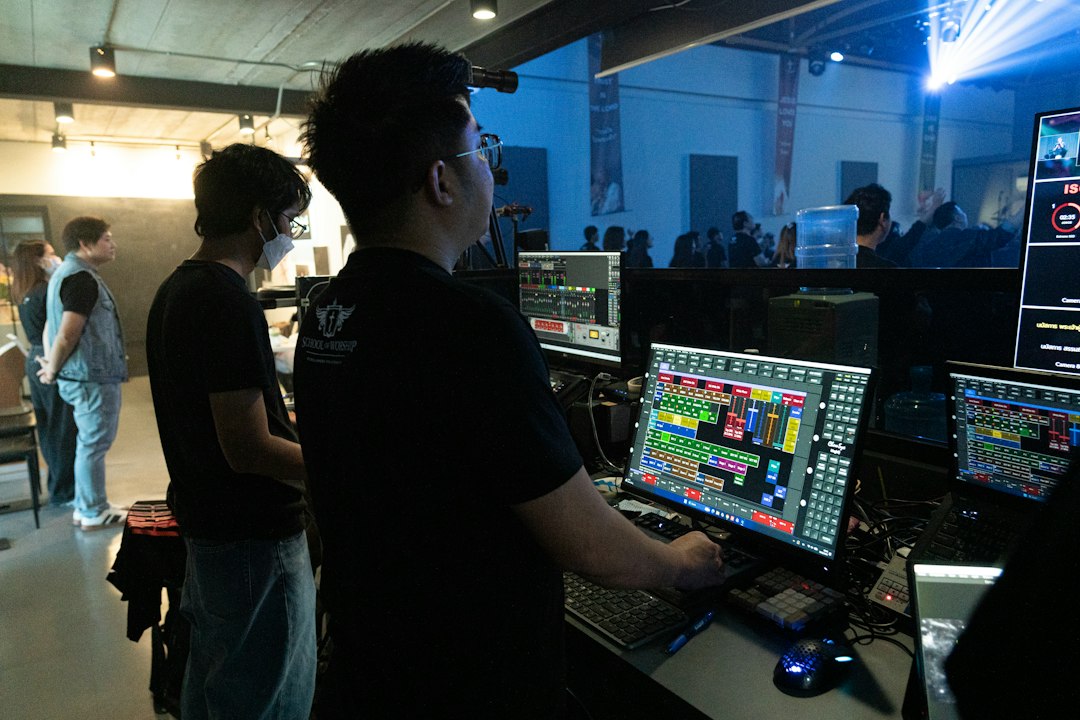
The Pain SOC Teams Face Today
Before looking at how AI can help, it’s worth outlining the operational problems security teams wrestle with. Most SOC environments are a patchwork of tools and manual processes that simply do not scale.
Too Many Alerts, Not Enough Humans
Modern SOCs ingest logs and signals from endpoints, cloud platforms, networks, identity providers, and business apps. This often results in:
- Thousands of daily alerts, with only a small fraction investigated in depth.
- High false-positive rates, eroding analyst trust in detection rules.
- Alert fatigue and burnout, leading to missed critical incidents.
Fragmented Tooling and Siloed Data
Most enterprises operate a blend of SIEM, EDR/XDR, CASB, vulnerability scanners, and bespoke scripts. Without strong integration, analysts must:
- Context-switch across multiple consoles to triage a single alert.
- Copy and paste indicators between tools to investigate threats.
- Rely on tribal knowledge instead of repeatable playbooks.
The outcome is slower response and inconsistent quality across shifts and teams.
What “AI-Powered Cybersecurity Operations” Really Means
The phrase “AI-powered” is often overused, but in security operations it typically refers to a blend of machine learning, large language models (LLMs), and rule-based automation layered on top of existing tools.
Key Domains Where AI Can Help
- Alert triage: Classifying, deduplicating, and prioritizing alerts based on context and historical outcomes.
- Enrichment: Automatically pulling threat intel, asset data, user context, and vulnerability information for faster decisions.
- Guided investigation: Proposing next steps, queries, or playbooks to analysts using natural language.
- Automated remediation: Executing predefined steps like blocking IPs, isolating endpoints, or resetting credentials.
CyberKord’s positioning—automating AI-powered cybersecurity operations—suggests an emphasis on stitching these elements into coherent workflows, not just providing point-in-time analytics.
From SOAR to AI-First Orchestration
Security Orchestration, Automation and Response (SOAR) platforms paved the way for automated workflows in the SOC. However, traditional SOAR often requires heavy playbook engineering and maintenance. AI-first platforms aim to reduce that burden.
| Capability | Traditional SOAR | AI-Driven Ops Platforms (e.g., CyberKord-style) |
|---|---|---|
| Playbook creation | Manual, rule-based, time-consuming | Assisted with AI suggestions and templates |
| Alert triage | Static rules, high tuning overhead | ML/LLM-powered prioritization and deduplication |
| Analyst experience | Form-based workflows, rigid UI | Chat-style guidance, natural language queries |
| Adaptation to new threats | Manual rule updates | Faster iteration using patterns and feedback loops |
The €2.7M raise gives CyberKord more runway to build out this kind of AI-native orchestration, likely focusing on lowering the barrier for teams that lack dedicated automation engineers.
Core Use Cases for AI-Driven Security Automation
While specific product features aren’t detailed in the funding note, we can outline common use cases that platforms in this category target—and that CyberKord is likely to prioritize.
1. Automated Alert Triage at Scale
AI models can analyze incoming alerts, compare them with historical incidents, and:
- Auto-close clearly benign alerts (e.g., known noisy signatures).
- Group related alerts into a single incident for investigation.
- Escalate high-risk signals based on user roles and asset sensitivity.
2. Intelligent Incident Enrichment
Once an incident is created, enrichment is key. AI can automatically:
- Fetch WHOIS and reputation data for suspicious IPs and domains.
- Check for known vulnerabilities on affected hosts or services.
- Pull recent authentication and activity logs for involved users.
This reduces the time analysts spend on repetitive data gathering.
3. Playbook-Driven Response with AI Assist
Automated playbooks handle standard incident types—phishing, credential stuffing, malware outbreaks, insider misuse. AI can help by:
- Recommending the right playbook when an incident is created.
- Explaining each step in plain language for junior analysts.
- Suggesting tweaks based on past outcomes or new threat intel.

How Funding Accelerates Product and Market Expansion
A €2.7M round is significant for a cybersecurity startup focused on AI operations. While precise allocation plans aren’t public, this level of capital typically fuels three parallel tracks: product development, talent acquisition, and go-to-market expansion.
Building Out the Product
On the product side, funds are likely to support:
- Deeper integrations with SIEM, EDR/XDR, cloud platforms, and ticketing tools.
- Improved AI models trained on security-specific data and workflows.
- Robust auditability so every automated action is explainable and reviewable.
Scaling the Team
Effective AI security platforms require cross-disciplinary expertise. Investment will often go into:
- Hiring security engineers with SOC and incident response experience.
- Expanding data science and ML engineering teams.
- Bringing in customer success and solutions architects to help clients onboard.
Expanding the Market Footprint
On the commercial side, funding enables more proactive outreach to mid-market and enterprise customers, participation in security conferences, and partnership programs with MSSPs and consultancies.
Designing an AI-Ready Security Operations Stack
Whether or not an organization chooses CyberKord specifically, the broader question remains: how can you prepare your security operations for AI-enabled automation?
Step-by-Step Approach for Security Leaders
- Map your current workflows: Document how alerts are created, triaged, escalated, and resolved across tools.
- Identify repetitive tasks: Highlight steps like ticket creation, enrichment, and standard remediation actions.
- Prioritize low-risk automation: Start with tasks that have clear rules and minimal business impact if misfired.
- Consolidate and normalize data: Ensure logs and events are structured and accessible via APIs.
- Pilot AI capabilities in a sandbox: Test on historical incidents before enabling changes in production.
- Define guardrails and approvals: Decide where humans must approve AI-suggested actions.
- Measure and iterate: Track metrics like mean time to detect (MTTD), mean time to respond (MTTR), and alert closure rates.
Quick Automation Readiness Checklist
Before deploying any AI-powered security operations platform, confirm that: (1) you have a central source of truth for security events; (2) your incident categories and severities are clearly defined; (3) each common incident type has at least a basic playbook; and (4) your team understands which actions can be fully automated versus those requiring explicit approval.
Balancing Automation with Human Judgment
Even with advanced AI, cybersecurity is not a “set and forget” domain. The challenge is to automate the right layers while preserving expert oversight.
Where Automation Works Best
- High-volume, low-complexity tasks like log correlation and basic enrichment.
- Standard operating procedures for known incident types.
- Continuous hygiene tasks such as disabling stale accounts or enforcing MFA policies.
Where Humans Must Stay in the Loop
- Ambiguous cases involving sensitive users or critical infrastructure.
- Decisions with major business impact, such as wide network segmentation.
- Adversary simulations, threat hunting, and strategy-level decisions.
Platforms like CyberKord are most effective when used to augment analysts—removing toil so experts can apply judgment where it matters most.
Evaluating AI-Powered Security Platforms
With more vendors entering the AI security operations space, security leaders should apply a clear evaluation framework. Beyond feature lists, focus on maturity, reliability, and fit with your environment.
Key Questions to Ask Vendors
- How do you handle data privacy and residency for logs and incidents?
- Which tools and platforms do you integrate with natively today?
- Can we restrict or approval-gate certain automated actions?
- How are your AI models trained, and what transparency do we have into decisions?
- What metrics from existing customers demonstrate reduced workload or faster response?
What CyberKord’s Raise Signals About the Market
The fact that investors are backing a €2.7M round focused on AI-powered security operations suggests that the market sees enduring demand for automation in the SOC. Threats are not slowing down, and hiring enough experienced analysts remains difficult. Automation is increasingly viewed as a necessity, not a luxury.
We can expect continued innovation around AI copilots for analysts, adaptive playbooks, and integrated analytics. Funding rounds like CyberKord’s will likely accelerate competitive pressure and, ultimately, drive better tools and outcomes for security teams.
Final Thoughts
CyberKord’s €2.7M raise is another sign that AI-driven automation is becoming central to modern cybersecurity operations. While the specific roadmap will evolve, the direction is clear: SOCs must move from manual, reactive workflows to orchestrated, AI-assisted processes that scale. For security leaders, the priority now is to prepare their data, playbooks, and teams to take advantage of this new generation of platforms—without sacrificing governance or human judgment.
Editorial note: This article is an independent analysis based on publicly referenced funding information and general industry trends. For more details, visit the original source at https://www.konsulteer.com.