How Cost-of-Living Pressures and AI Are Rewriting Customer Loyalty
Households are watching every dollar, yet brands still need to earn repeat business in increasingly competitive markets. At the same time, AI is reshaping how marketers understand, reward and communicate with customers. This collision of cost-of-living pressure and rapid AI innovation is rewriting the rules of loyalty programs. This article explores how to adapt your strategy, protect margins and build trust with customers who are more value-conscious than ever.
Why Customer Loyalty Is Being Rewritten Right Now
Customer loyalty has always been fragile, but the combination of cost-of-living pressure and rapid AI innovation is forcing a complete rethink. Shoppers are more price-sensitive, more digitally savvy, and more willing to switch brands when value expectations are not met. At the same time, AI is giving marketers unprecedented tools to analyse behaviour, personalise offers and automate interactions at scale.
In other words, the stakes are rising on both sides. Consumers expect tangible, immediate value. Brands can deliver it more precisely than ever, but only if they use AI thoughtfully and responsibly. Loyalty programs that once relied on generic points and slow-burn rewards now need to prove their worth in every interaction.
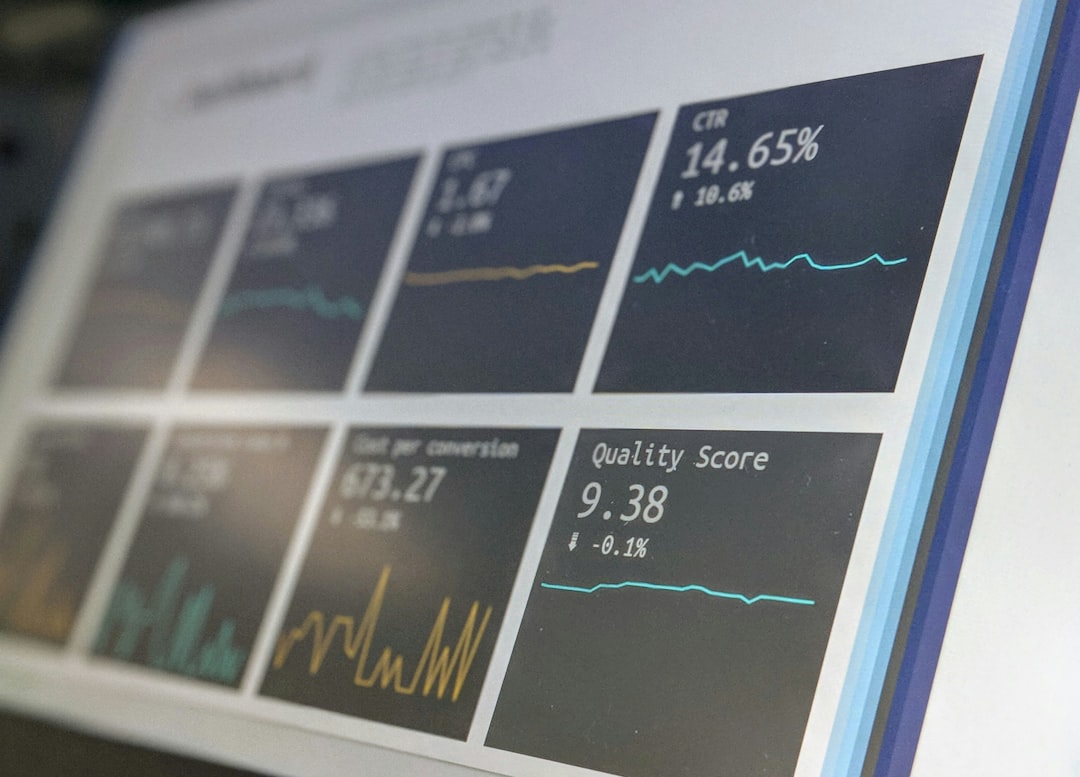
The New Reality: Cost-of-Living Pressure Changes Customer Priorities
Economic pressure reshapes what customers care about and how they judge loyalty propositions. When living costs climb, even historically loyal shoppers reassess their habits. Brand affection matters less than bills, groceries and rent.
From Brand Love to Value Proof
In tighter times, customers still want emotional connection with brands, but only after the basics are satisfied. They ask a different set of questions:
- “Is this worth it right now?” — Immediate, concrete value beats aspirational benefits.
- “Can I get this cheaper or better elsewhere?” — Competitor comparisons become routine.
- “What do I actually get back for my loyalty?” — Points without clear utility feel pointless.
Loyalty strategies based on long-term accumulation, vague perks or hard-to-redeem rewards no longer feel credible. Customers want clarity on how their engagement translates into savings, convenience or better service today, not just someday.
The Rise of the “Portfolio Shopper”
Many customers now spread their spending across multiple brands and platforms, hunting for deals and stacking rewards wherever possible. Rather than being wholly loyal to a single retailer or provider, they manage a personal “portfolio” of loyalty programs.
- Switching is normal: Consumers mix and match based on promotions, availability and short-term value.
- Comparisons are easier: Price-comparison tools and deal apps surface alternatives instantly.
- Trust must be earned repeatedly: Every visit or transaction is a fresh opportunity to keep or lose them.
In this environment, loyalty isn’t a fixed status. It’s an outcome you must re-earn with each interaction, backed by data and delivered with precision.
How AI Is Transforming Loyalty Programs
AI does not magically create loyalty, but it radically upgrades the tools marketers can use. Instead of designing one-size-fits-all schemes, brands can build responsive, adaptive loyalty ecosystems that react to real behaviour.
From Segments to “Markets of One”
Traditional loyalty programs group customers into broad segments based on demographics or lifetime value. AI allows far more granular profiles, based on thousands of signals:
- Purchase history and frequency
- Browsing behaviour and content engagement
- Channel preferences (app, email, in-store, web)
- Response patterns to past offers and campaigns
- Contextual details like time of day or typical basket mix
Machine-learning models can infer not only what a customer did, but what they are likely to do next, and what might nudge them in a particular direction. This is the foundation of real-time, one-to-one loyalty experiences.
Real-Time Personalisation at Scale
Modern loyalty strategies increasingly rely on AI to orchestrate the right action at the right moment, such as:
- Sending a tailored offer just before a predicted replenishment date.
- Adjusting rewards based on the margin profile of items in a customer’s basket.
- Serving personalised content in your app that fits their current budget and interests.
- Triggering a service outreach when early signals of churn appear.
Instead of blunt instruments (site-wide discounts, generic points multipliers), AI lets you deliver precision incentives that protect margin while increasing perceived value.
Automation That Feels Human
AI-powered chatbots, assistants and recommendation engines can now handle a large share of loyalty-related interactions: checking points balances, suggesting ways to redeem, answering questions about benefits, and even coaching customers toward smarter ways to save.
The challenge is to make these interactions feel human, transparent and genuinely helpful, not like thinly disguised sales engines. Getting this right hinges on how you design your rules, your tone of voice and your escalation paths to human agents.
Customer Behaviour in a Cost-of-Living + AI World
To design effective loyalty campaigns today, you need to understand how consumer behaviour is shaped by both economic pressure and digital expectations. Several patterns stand out.
Hyper-Comparison and Deal-Seeking
Consumers trained by e-commerce and smartphones naturally compare:
- Prices: Quick comparisons across sites and apps before checkout.
- Rewards: Evaluating which program gives the most back on a given basket.
- Timing: Waiting for flash sales, bonus point events or pay-day promotions.
AI-enhanced deal platforms also surface personalised discounts, making it even easier for consumers to pivot away from brands that are not competitive on value.
Lower Patience and Higher Expectations
AI has enabled next-level personalisation in many leading apps and platforms. As a result, customers expect:
- Instant answers and resolutions.
- Offers that reflect their current situation, not last year’s behaviour.
- Consistent experiences across devices and channels.
Inconsistent or slow loyalty experiences feel outdated today. Long forms, confusing redemption rules or opaque points valuations are now major friction points.
Greater Sensitivity to Fairness and Trust
When money is tight, perceived fairness becomes central. Customers scrutinise:
- Whether “loyal” members really get better deals.
- How data is used to set prices and offers.
- Whether rewards devalue over time (e.g., more points required for the same reward).
AI can inadvertently raise suspicion if customers feel they are being individually targeted with worse prices or manipulative tactics. Transparency and clear communication are therefore essential components of any AI-enabled loyalty program.
Design Principles for Loyalty Programs Under Cost Pressure
To thrive in this environment, loyalty strategies must be re-engineered around a few core principles.
1. Make Value Obvious and Immediate
Loyalty should not feel like a long-term gamble. Customers should experience value within the first few interactions:
- Welcome bonuses that can be redeemed quickly.
- First-purchase or early-life-cycle perks.
- Clear savings or exclusive access that customers can see and feel.
Even small, well-communicated wins create momentum and trust.
2. Keep Rewards Flexible and Relevant
In a cost-of-living crunch, priorities change. Programs that lock customers into narrow, hard-to-use rewards risk irrelevance. Instead, design for flexibility:
- Allow points to offset basket totals, not just specific items.
- Offer multiple redemption paths: savings, experiences, donations.
- Let AI surface the most relevant options based on life stage, budget and behaviour.
3. Align Loyalty Economics with Margin
The goal is to be generous where it matters to customers and sustainable where it matters to the business. AI can help:
- Target high-value incentives to the most at-risk, most-profitable segments.
- Promote products with healthier margins or strategic importance.
- Reduce blanket discounts that erode margin without driving loyalty.
In practice, this means feeding cost and margin data into your decisioning engines, so the AI understands what you can afford to give away.
4. Prioritise Simplicity and Transparency
Complex rules erode trust, especially when money is tight. Make it easy to grasp:
- How points are earned and redeemed.
- What tiers mean and how to maintain them.
- What data you use and what customers get in return.
AI can help simplify the experience (e.g., auto-calculating best redemption options), but only if your underlying rules are genuinely straightforward.
Where AI Adds the Most Value in Loyalty Campaigns
AI’s impact on loyalty is broad, but a few applications deliver outsized benefits when cost-of-living pressure is high.
Predictive Retention and Churn Prevention
Predictive models can flag customers who show early signs of disengagement, such as:
- Reduced frequency or basket size.
- Increased browsing without purchasing.
- Shifts to lower-margin categories or entry-level products.
With those signals, you can act ahead of time:
- Offer a personalised incentive or savings bundle.
- Recognise and reward their historical loyalty explicitly.
- Send educational content about how to get more value from the program.
Offer Optimisation and Testing at Scale
AI can continuously test and refine offers across micro-segments. Rather than a few big A/B tests per year, you can run constant experiments on:
- Different reward types (cashback, points, upgrades, free shipping).
- Message framing (savings-focused vs. experience-focused).
- Timing (pre-payday vs. weekend vs. pay-week promotions).
Models can then prioritise combinations that maximise both conversion and profitability.
Recommendation Engines Tuned for Value
Product recommendations are a natural fit for AI, but in a cost-of-living context they must be tuned carefully. Instead of just promoting higher-value items, consider:
- Curating good-better-best options with clear value trade-offs.
- Suggesting budget-friendly alternatives to prevent losing the customer entirely.
- Highlighting bundle savings where the customer genuinely spends less overall.
Well-designed recommendation engines can turn your brand into a helpful guide rather than a relentless upseller.
AI-Powered Service and Support
Loyalty is as much about how you resolve problems as how you reward purchases. AI chatbots and virtual agents can:
- Answer questions about points, tiers and benefits instantly.
- Proactively offer goodwill gestures or bonus points after a service failure.
- Route complex cases quickly to human agents with context attached.
This level of responsiveness helps cost-stressed customers feel seen and valued, which is central to long-term loyalty.

Balancing Personalisation with Privacy and Fairness
The more AI you deploy, the more carefully you need to handle data, consent and perceived fairness. Missteps in these areas can quickly destroy trust, particularly when customers feel financially vulnerable.
Data Ethics in Loyalty Programs
Responsible data practices are no longer optional. Key principles include:
- Consent and clarity: Explain what data you collect and why, in plain language.
- Value exchange: Make clear what customers get back in return — savings, convenience, personalised experiences.
- Security: Protect data with strong technical and organisational measures.
AI systems should be designed so that sensitive attributes are handled carefully and not used to disadvantage particular groups.
Guarding Against Algorithmic Bias
AI models can inadvertently create unfair outcomes — for example, systematically offering better deals to certain demographics or locations without a valid reason. To mitigate this:
- Audit models regularly for disparate impact across customer groups.
- Define rules that explicitly prevent discriminatory targeting.
- Allow for human review of high-impact decisions where necessary.
Loyalty should feel inclusive and merit-based, not arbitrary or biased.
Transparent Use of AI
Customers are increasingly aware that AI powers many digital experiences. Transparency builds comfort:
- Label AI-driven recommendations or chatbots clearly.
- Give customers simple ways to override or opt out of certain personalisation features.
- Explain, at a high level, how AI helps them save or gain more from the program.
The aim is to show that AI is being used with customers, not on them.
Redesigning Loyalty Communications in a Cost-Sensitive Era
Loyalty campaigns live or die according to how well they are communicated. Messages must cut through noise, feel empathetic and show credible value quickly.
Shift the Narrative from “Rewards” to “Relief and Support”
In a cost-of-living crunch, tone matters. Overly glamorous or luxury-focused narratives can feel tone-deaf. Instead, position your program around:
- Relief: Help customers feel they are stretching their budgets further.
- Stability: Offer predictable benefits they can count on.
- Support: Frame the brand as a partner helping them navigate tough times.
AI-Driven Message Personalisation
AI can craft or select different message variations for different customers, but guardrails are essential. Good practice includes:
- Adjusting the offer and emphasis (savings vs. experience) based on past behaviour.
- Maintaining a consistent brand voice across all AI-crafted communications.
- Reviewing generative content regularly to avoid off-brand or insensitive phrasing.
Reducing Cognitive Load
Economically stressed customers are often mentally overloaded. Make loyalty easy to understand and act on:
- Summarise key benefits in plain language.
- Use progress indicators (“You’re 80% of the way to your next reward”).
- Provide one-click or one-tap actions to redeem, upgrade or apply offers.
AI can help determine which information to show first, but the overarching goal is simplicity.
Practical Framework: Updating Your Loyalty Strategy with AI
Transforming a loyalty program can feel daunting, especially when budgets are tight. The following framework breaks it into manageable steps.
Step-by-Step Roadmap
- Clarify your objectives. Decide what matters most over the next 12–24 months: reducing churn, growing basket size, shifting mix, or improving satisfaction.
- Map your data foundations. Audit what customer data you have, where it lives, and how reliable it is. Identify gaps that block personalisation or measurement.
- Segment by needs and pressure. Use existing data (even simple recency-frequency-monetary models) to identify who is most price-sensitive, who is most loyal, and who is at risk.
- Define your value promises. For each priority segment, articulate a clear, specific answer to “Why should I stay loyal to you right now?”
- Prioritise AI use cases. Start with one or two high-impact applications, such as churn prediction or offer optimisation, rather than trying to do everything at once.
- Design experiments. Use test-and-learn cycles with clear success metrics: incremental revenue, margin impact, engagement, or NPS.
- Strengthen governance and ethics. Establish guidelines for data use, bias checks and human oversight for AI-driven decisions.
- Scale what works. Once pilots show positive results, integrate them into your broader CRM and campaign orchestration stack.
Quick-Start Toolkit: 5 Questions to Refocus Your Loyalty Program
Use this checklist in your next strategy session:
1) If our program launched today, would it still feel relevant in a cost-of-living crunch?
2) Where do customers see immediate, tangible value in their first 30 days?
3) Which AI use case could most quickly prevent churn or increase perceived value?
4) Are any rules or mechanics confusing enough to erode trust?
5) How clearly do we explain what data we use and what customers get in return?
Comparing Traditional vs AI-Enhanced Loyalty Approaches
Not every brand has fully embraced AI yet. Understanding the differences helps clarify what you stand to gain.
| Dimension | Traditional Loyalty | AI-Enhanced Loyalty |
|---|---|---|
| Targeting | Broad segments, infrequent updates | Dynamic micro-segments, updated continuously |
| Offers | Generic discounts and points multipliers | Individualised offers based on behaviour and margin |
| Timing | Fixed campaign calendars | Real-time triggers based on events and predictions |
| Customer Experience | Static rules, manual support | Adaptive journeys, AI-assisted support |
| Measurement | High-level KPIs, slow feedback | Granular insights, continuous optimisation |
| Economic Control | Blunt discounting, limited margin insight | Offer-level margin awareness, smarter generosity |
Common Pitfalls to Avoid
In the rush to modernise loyalty under pressure, some missteps are particularly costly.
Over-Reliance on Discounts
Heavy discounting can temporarily boost volume, but:
- Erodes brand equity and price integrity.
- Trains customers to wait for deals.
- Reduces your room to manoeuvre when conditions tighten further.
Use AI to identify where discounts truly change behaviour and where they simply subsidise purchases that would have happened anyway.
“Black Box” Personalisation
If customers cannot understand why they see certain offers, they may assume the worst — especially when finances are tight. Avoid:
- Opaque personalised pricing with no explanation.
- Inconsistent rewards for seemingly similar customers.
- Surprises at checkout that feel like penalties rather than rewards.
Explain how status, activity or preferences influence what a customer receives.
Ignoring the Human Element
AI can optimise mechanics, but loyalty is ultimately emotional. Do not neglect:
- Empathetic language in communications.
- Moments of surprise-and-delight that show genuine appreciation.
- Well-trained frontline staff who understand and champion the program.

Measuring Success in the New Loyalty Landscape
With more complexity and more data, measurement must also evolve. Relying solely on enrolment numbers or headline revenue can hide underlying issues.
Key Metrics to Track
- Incremental revenue and margin: What additional value do members generate compared to similar non-members?
- Redemption rate and time to first redemption: Are customers actually using the benefits, and how quickly?
- Churn and reactivation: How many at-risk customers are retained through loyalty interventions?
- Engagement depth: App logins, feature usage, review submissions, referrals.
- Perceived value: Survey scores on fairness, usefulness and ease of use.
Connecting Loyalty to Broader Brand Health
Loyalty initiatives should reinforce overall brand positioning. Monitor whether loyalty members:
- Report higher satisfaction and trust.
- Show greater resilience in spend during downturns.
- Advocate more strongly through referrals and reviews.
This broader perspective helps ensure that loyalty investments pay off beyond short-term promotional gains.
Final Thoughts
Cost-of-living pressures and rapid AI innovation are not temporary blips; together they mark a structural shift in how brands must think about loyalty. Customers are more value-conscious, less patient and more willing to explore alternatives. At the same time, AI gives marketers unprecedented capabilities to understand, serve and reward those customers in highly targeted ways.
The brands that will win are those that treat loyalty not as a points scheme, but as a dynamic, AI-enabled value partnership. They will combine clear, immediate benefits with ethical data practices, empathetic communication and disciplined economics. In doing so, they can support customers through difficult times while building deeper, more durable relationships that endure long after the current cost pressures ease.
Editorial note: This article was inspired by ongoing industry discussions about how cost-of-living pressures and rapid AI innovation are reshaping customer loyalty campaigns. For further context, see coverage at Campaign Brief.